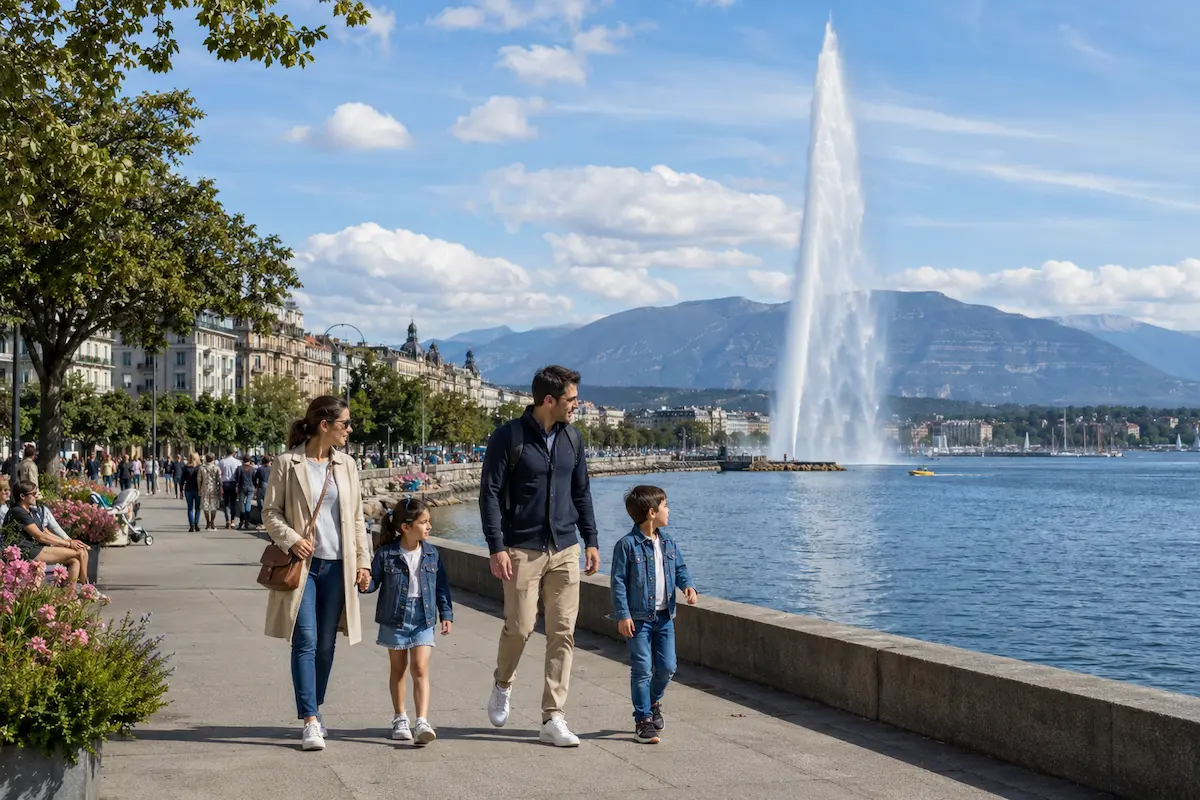
Geneva with Kids: What Works Best by Age, Weather and Energy Level
Planning Geneva with kids gets easier when you stop asking which attractions are “family-friendly” and start with four practical constraints: your children’s ages, the weather, how much energy everyone has, and whether you are willing to commit to a timed reservation.
That matters in Geneva because two of the city’s headline family possibilities illustrate the problem perfectly. CERN offers different experiences for different ages and uses separate systems for general entry and limited-capacity activities. A United Nations tour is open from age 6, but it adds a fixed booking, security time and considerable walking. The right choice is less about making a long attraction list and more about matching the day you actually have.
Age guidance, booking systems, opening status and visitor programs can change, particularly at CERN and the Palais des Nations. Recheck the official pages linked below shortly before your visit.
Geneva With Kids at a Glance: Match the Activity to the Day
Use this table as a filter rather than a ranking. “Best-fit age” sometimes reflects an official age recommendation and sometimes an editorial assessment based on the activity, walking and flexibility; those cases are identified separately.
| Activity | Best-fit age | Weather | Booking commitment | Time commitment | Energy | Best when… |
|---|---|---|---|---|---|---|
| Lakefront + Mouette shuttle boat | All ages; editorial fit | Best in dry or mixed weather | Low | Short and flexible | Low | You want an easy block that can be shortened |
| CERN Science Gateway | Strongest from 8+ for the exhibitions; some activities start younger | Indoor | Medium | Several hours can be justified | Medium | Science is a real family interest |
| United Nations guided tour | 6+ officially | Mostly indoor, but includes movement through the complex | High | About 1 hour plus early arrival and transport | Medium-high | Older children can handle a structured visit |
| Musée d’Histoire des Sciences | School-age and up; editorial fit | Indoor | Low for ordinary individual visits | Flexible | Low-medium | You need a smaller science option |
| International Red Cross and Red Crescent Museum | Strongest with older children; editorial fit | Indoor | Lower than a fixed institutional tour | Flexible | Low-medium | History and humanitarian themes suit the family |
| Old Town + St. Peter’s tower | Older children; editorial fit | Better in dry weather | Low | Flexible | High if climbing the tower | You want history, views and walking |
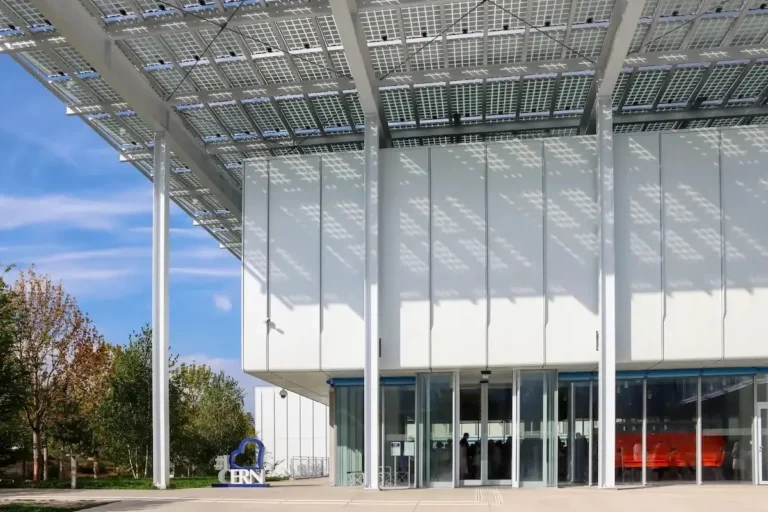
CERN is the clearest example of why age needs its own column. Its family and individual visitor guidance currently lists interactive exhibitions for ages 8+, science shows from 4+ and films from 12+. Lab workshops begin at different ages depending on the activity. The program can change from day to day, so the age on the specific activity matters more than a generic label such as “good for kids.”
What Works Best at Different Ages
Under 6: Keep the Day Flexible
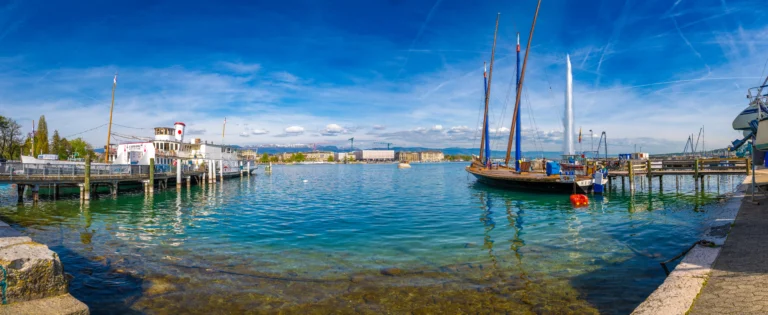
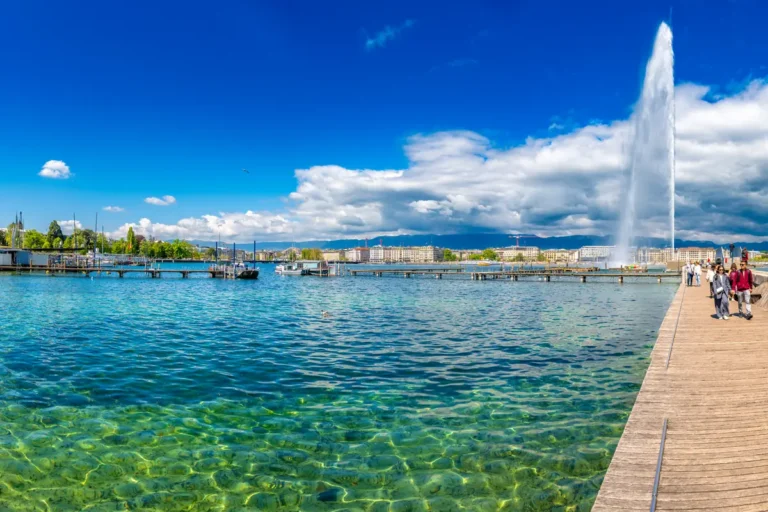
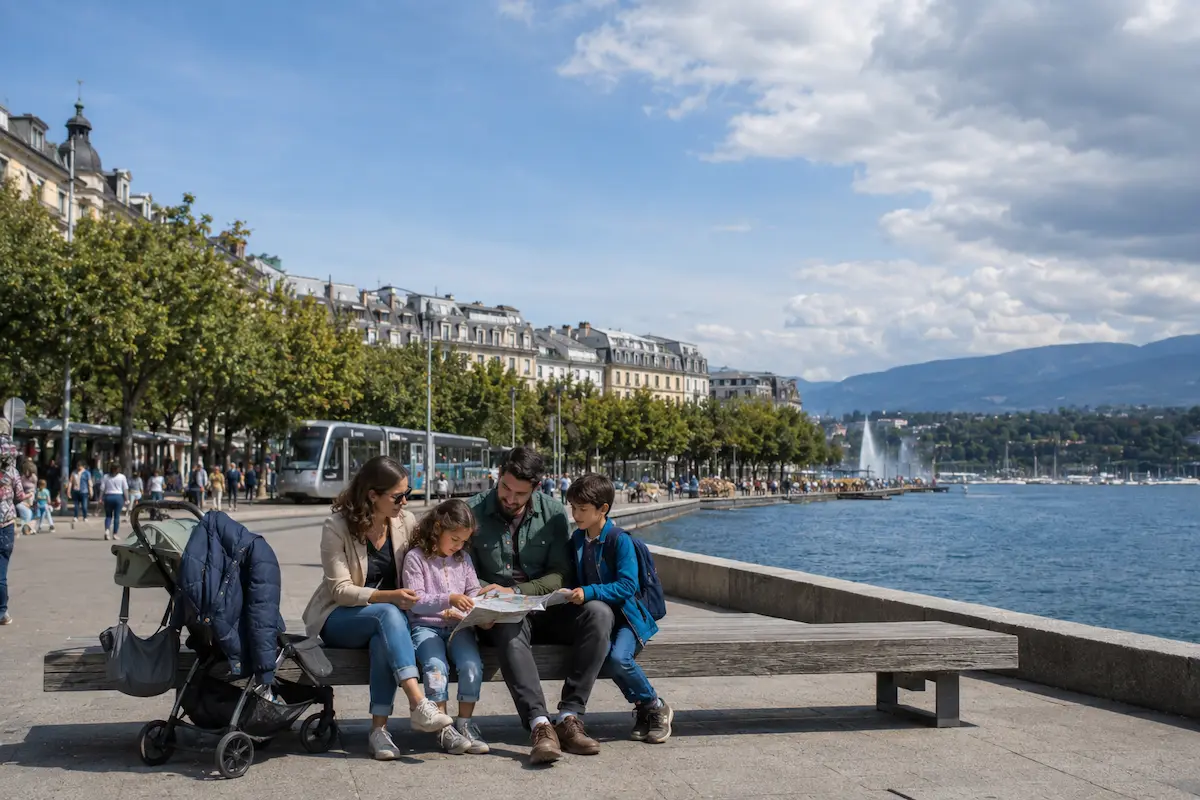
With toddlers and preschoolers, the strongest Geneva day is usually one you can shorten without losing a reservation or abandoning an expensive commitment. A lakeside walk, a playground or park block, and a short Mouette crossing give you natural exit points if hunger, weather or fatigue changes the plan.
CERN is not automatically excluded. Its general family information lists science shows from age 4 and lab workshops from age 5, and individual workshops have their own age ranges. But the main interactive exhibitions are described as best enjoyed from age 8, and workshop spaces are limited. For a child under 6, CERN makes more sense when the day’s specific program contains something appropriate than as a blanket recommendation to “visit CERN with kids.”
The standard UN guided tour does not yet fit this age group: UN Geneva states that guided visits are open from age 6.
Ages 6–7: Being Allowed In Is Not the Same as Being a Good Fit
At 6, the Palais des Nations becomes possible, but the age threshold answers only the admission question. The official visitor information says the tour itself lasts approximately one hour, asks visitors to arrive 30 minutes early and estimates about 2 km of walking. That can be a lot for a young child once transport and waiting are included.
The practical distinction is allowed versus well suited. A 6- or 7-year-old who enjoys structured explanations and can comfortably walk the route may do well. A child who needs movement breaks and frequent exits may be happier with a flexible museum, park or waterfront block.
CERN has a similar distinction. Some activities admit or target younger children, while the core exhibitions are principally recommended from age 8. Check the current CERN program rather than assuming every Science Gateway activity fits the same age.
Ages 8–13: Geneva’s Science Options Become Much Stronger
Age 8 opens the most straightforward version of Science Gateway. CERN says its interactive exhibitions are best enjoyed from 8+, with an official 90-to-180-minute estimate for the exhibition experience. Some workshops also target this range, including activities specifically designed for ages 8–12.
The International Red Cross and Red Crescent Museum also becomes easier to tailor to school-age children. Its current practical information lists a special permanent-exhibition audio guide for ages 8–12 and another version for teenagers, although those two youth versions are currently in French only.
This is the age range where a rainy day can become a genuinely strong museum-and-science day instead of merely a weather compromise.
Ages 14+: CERN and the UN Become Different Experiences
Teenagers can handle more of the content and logistics that make Geneva’s institutional attractions distinctive. At the UN, participants need to register for an access badge from age 14 onward, in addition to holding the tour booking.
CERN requires a little more care because its own pages are not perfectly aligned. The broad family overview currently summarizes guided tours as 12+, while the specific guided-tour page says they are recommended from 14 and not suitable for young children; current live program listings also use 14+ for the standard Synchrocyclotron/ATLAS tour. For planning, 14+ is therefore the safer threshold to use for that specific tour, while checking your date’s live program before relying on it.
If CERN is a priority, the detailed TripFinch CERN Geneva visit guide explains the two booking layers without repeating them here.
Rain Changes the Shortlist More Than You Might Expect
A rainy Geneva day does not mean choosing the nearest museum from an old family-attractions list. One especially important option is currently unavailable.
Do Not Build Your Rain Plan Around the Natural History Museum Right Now
The current Musées de Genève page labels the Muséum d’Histoire Naturelle de Genève closed for renovation and remediation, with reopening scheduled for 2028. That makes it unsuitable as a current default rainy-day recommendation even though older travel pages may still present it as an obvious indoor family stop.
Because reopening schedules can change, this is exactly the type of detail worth checking again before a future trip rather than carrying an old recommendation forward indefinitely.
Strong Indoor Anchors
For science-focused families, CERN is the largest indoor anchor in this guide. The exhibitions alone have an official 90-to-180-minute estimate, and CERN says its other public activities can support a visit of more than three hours even when a visitor does not secure a limited-capacity guided tour or workshop.
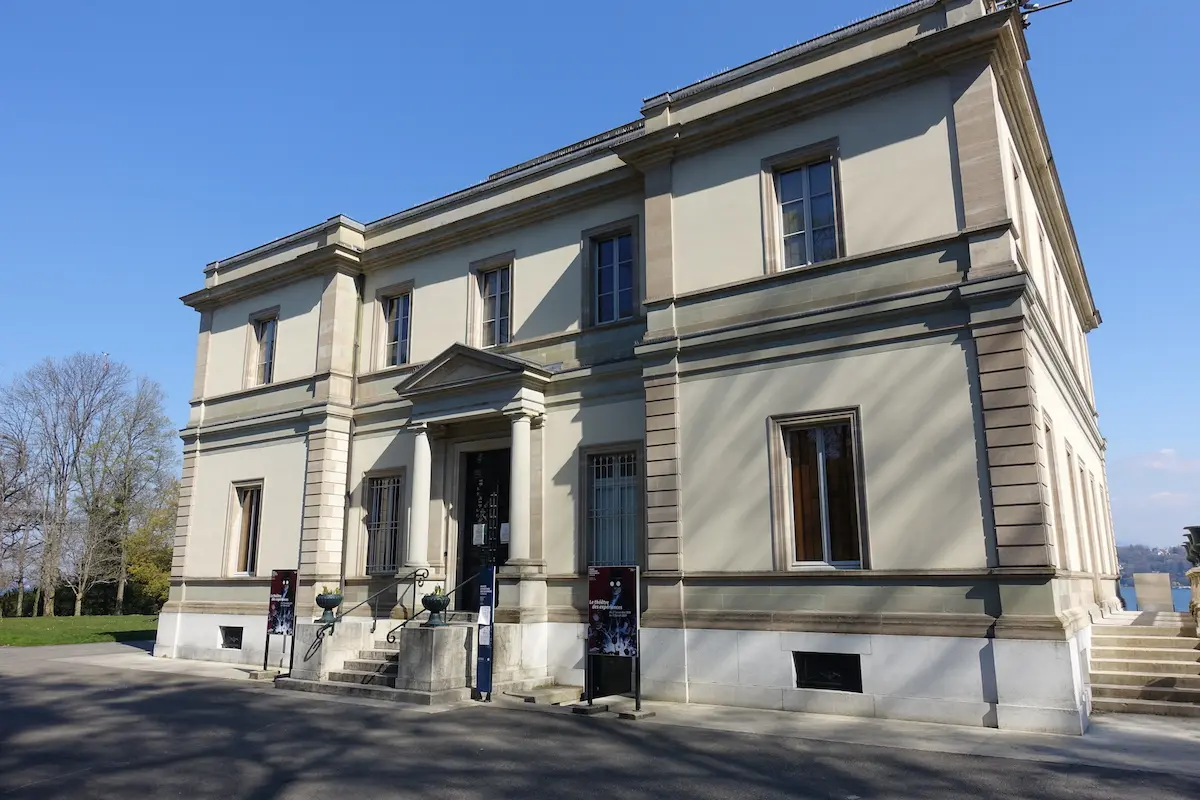
For a smaller commitment, the Musée d’Histoire des Sciences occupies Villa Bartholoni at La Perle du Lac and displays historic scientific instruments. Admission is free; it is currently open Wednesday through Monday and closed Tuesday. One family-specific constraint is worth noticing: strollers are not permitted in the exhibition rooms.
The Red Cross Museum is another substantial indoor option, especially for older school-age children and teenagers who will engage with humanitarian history rather than simply looking for hands-on entertainment.
When the Forecast Is Mixed, Keep One Flexible Outdoor Block
A mixed forecast is often easier than an all-day rain forecast because Geneva has short outdoor components that do not need to control the whole schedule.
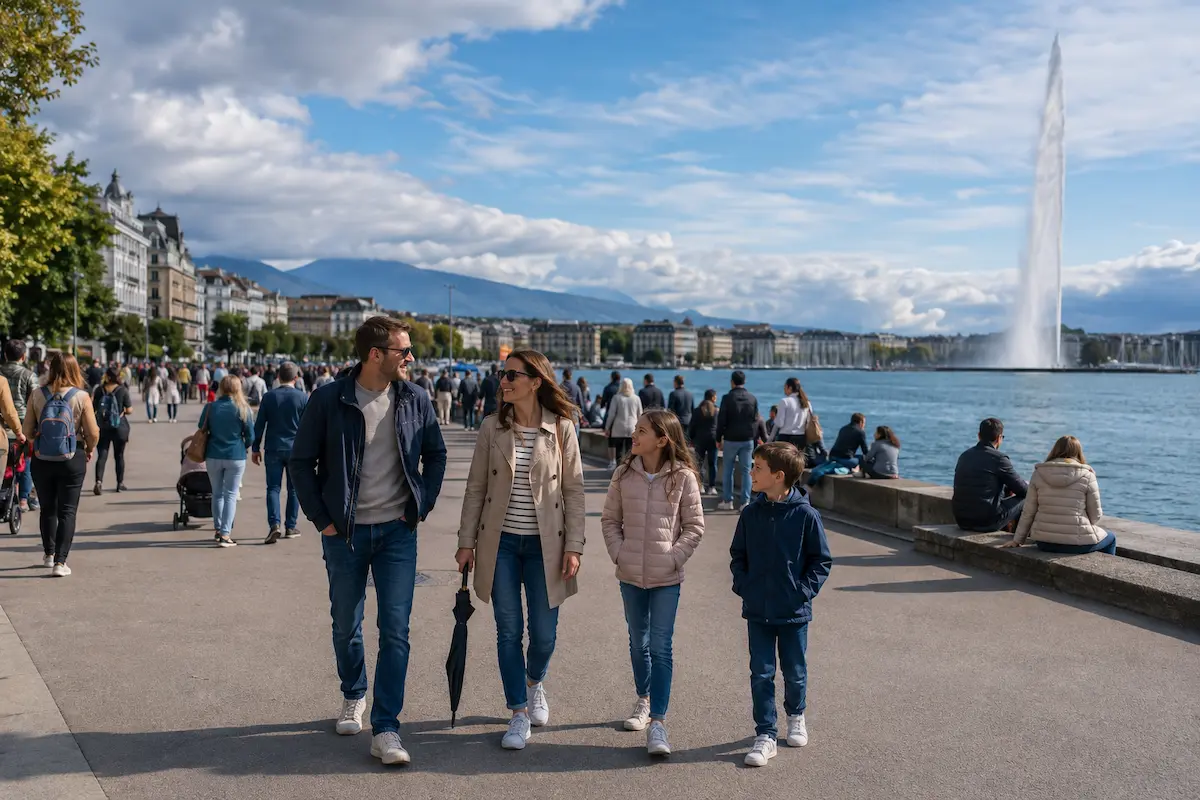
The Mouettes Genevoises are particularly useful here. They are public shuttle boats rather than a long sightseeing cruise, so a crossing can become transportation, a short lake experience and a recovery break at the same time. Eligible guests staying in approved Geneva accommodations receive a Geneva Transport Card that includes buses, trams, trains and the Mouettes during the covered stay.
The useful strategy is not to schedule hours outside because the morning looks dry. Keep one lakefront or park block movable, and protect the indoor attraction that matters more.
Choose by Energy Level, Not Just by Interest
Parents often plan around what children like and underestimate how much friction an attraction adds. For this guide, low energy means short, flexible and easy to leave; medium energy means a meaningful block with manageable walking; high energy means substantial walking, stairs, fixed procedures or several hours of commitment.
Low Energy: Short, Flexible and Easy to Abandon
A Mouette crossing plus a limited section of the lakefront is one of the easiest low-energy combinations. If everyone is doing well, continue along the water. If not, use public transport and stop.
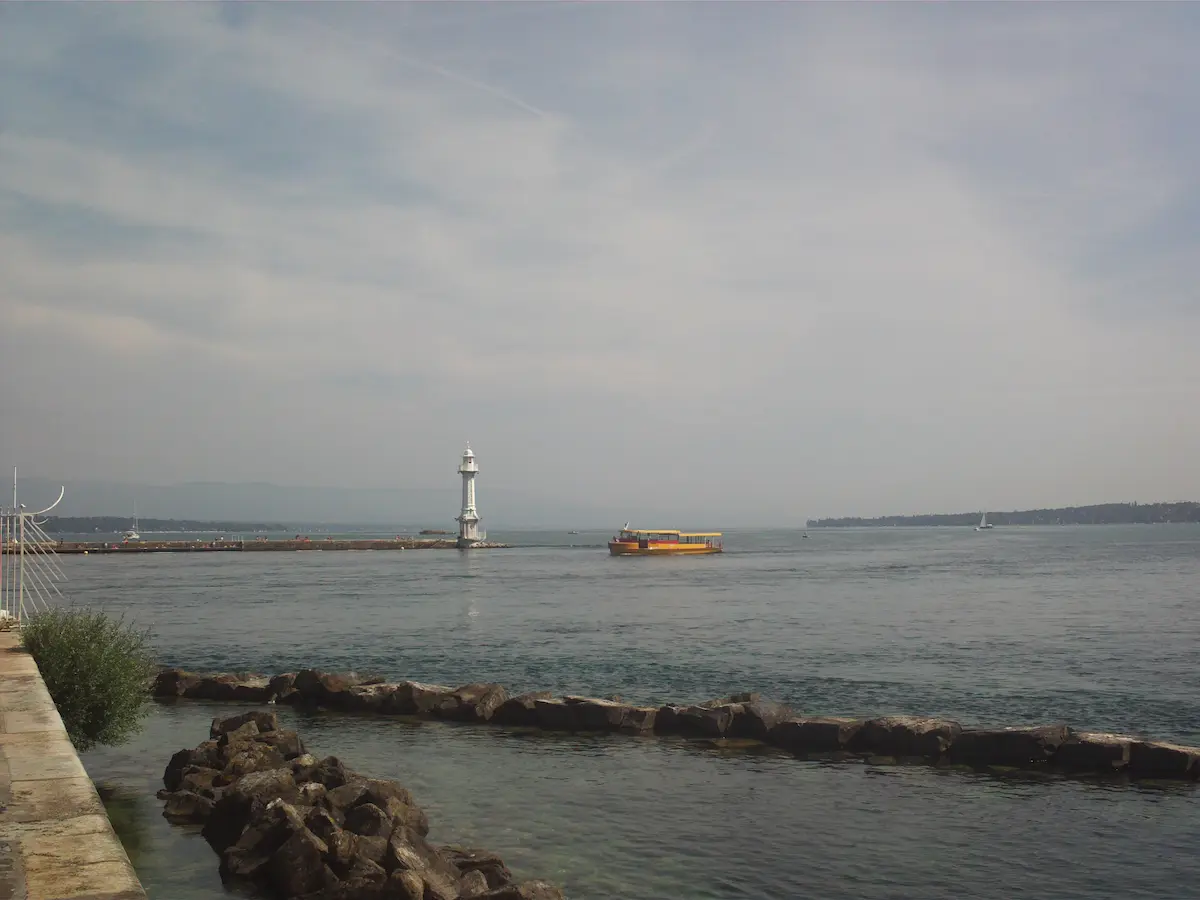
The Geneva Transport Card makes that strategy particularly useful for eligible overnight guests because transportation does not need to be saved only for long distances. Using a tram, bus or boat for a short section can preserve energy for the activity your children actually care about.
The Musée d’Histoire des Sciences can also work as a lower-energy indoor block because the visit time is flexible, although families using a stroller need to account for the gallery restriction.
Medium Energy: One Substantial Indoor or Cultural Anchor
Science Gateway fits well here when you treat the self-guided exhibitions as the core visit rather than chasing every available activity. CERN’s published exhibition window of 90–180 minutes is long enough to feel substantial but still gives a family more control than a fixed guided program.
A museum works similarly: the family can control pace, decide when enough is enough and avoid building the entire day around one start time.
High Energy: Save Walking and Stairs for the Day You Actually Want Them
A short published duration can hide physical effort. The UN tour is a good example: the official tour lasts about one hour, but UN Geneva estimates approximately 2 km of walking and asks visitors to arrive 30 minutes early for security and transfer. The real family commitment is therefore larger than the tour duration printed on the ticket.
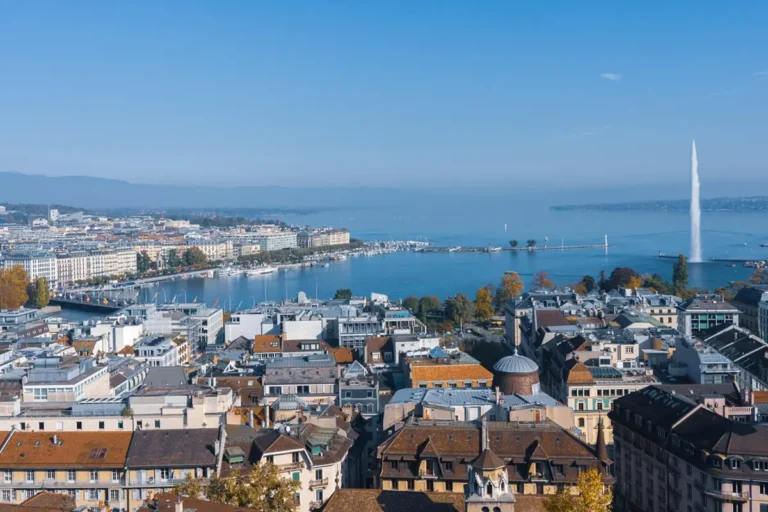
Old Town can also become high-energy when you add interiors and viewpoints. Geneva Tourism states that reaching the top of St. Peter’s Cathedral towers involves 157 steps. That can be a worthwhile choice with energetic older children, but it is a poor “one more thing” after everyone is already tired.
Book First or Stay Flexible? CERN and the UN Need Different Strategies
CERN and the Palais des Nations both require planning, but they should not be treated as the same type of reservation.
UN: A Fixed Appointment
For individual visitors, UN Geneva currently releases guided-tour availability on the 20th of each month for the following month and warns that tours often sell out quickly. Once you have a ticket, plan around the appointment rather than trying to insert it between flexible sightseeing stops.
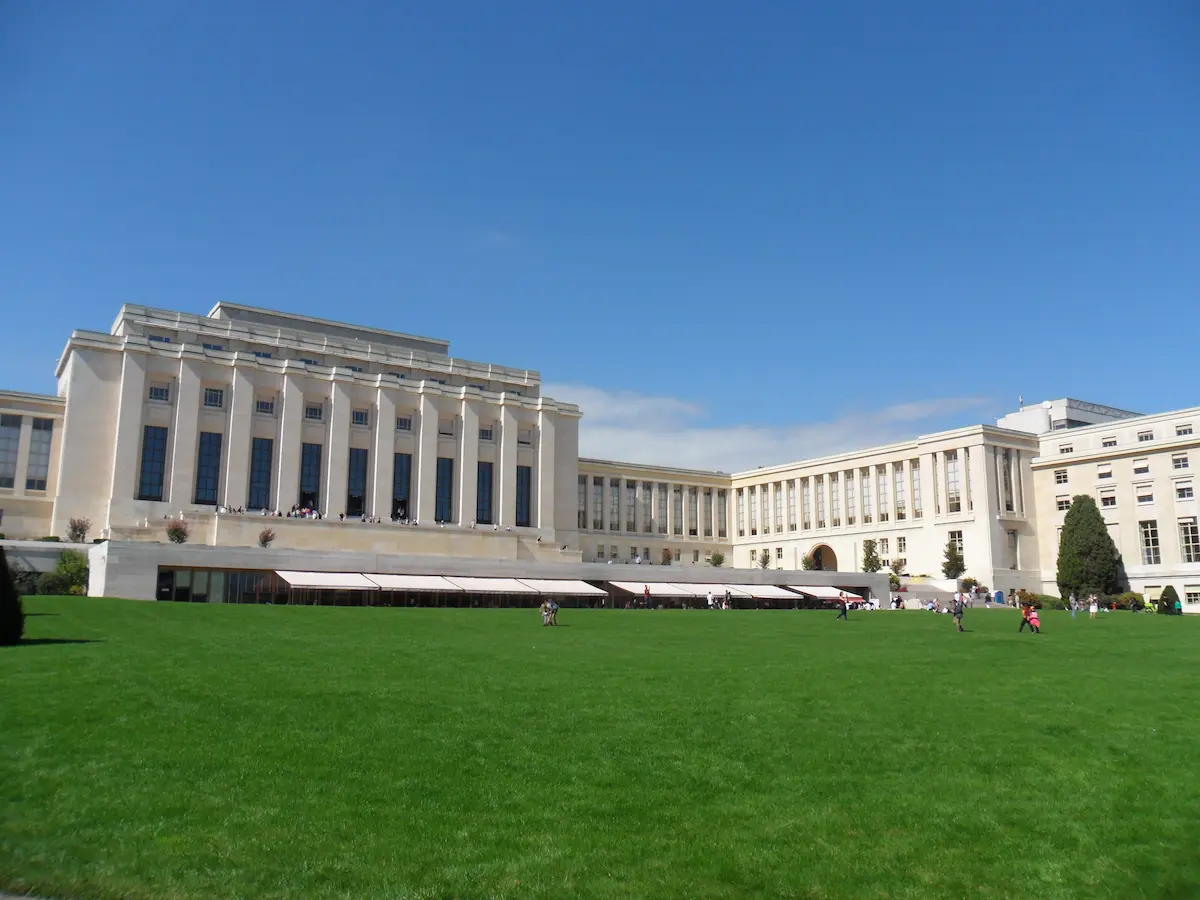
The official instructions require arrival 30 minutes before the tour for security screening and transfer, and the visit itself lasts approximately one hour. From age 14, the access-badge registration step also applies.
For the full booking, identification and renovation details, use the TripFinch United Nations Geneva tour guide.
CERN: Secure Entry, Keep Limited Activities Conditional
CERN works differently. Families and individual visitors can register for Science Gateway online up to one month in advance; CERN says that advance registration guarantees entry. On-site registration is also possible if capacity remains.
A Science Gateway booking does not reserve a guided tour or lab workshop. Those limited-capacity activities require a separate on-site booking after arrival. CERN says only about 10% of Science Gateway visitors obtain a guided-tour or lab-workshop place, so your family day should still work if neither becomes available.
That is the central planning difference: make the UN tour the fixed appointment; make CERN’s self-guided visit the reliable core and a tour or workshop the possible bonus.
Flexible Stops Are Valuable When Kids Are Unpredictable
A family itinerary made entirely of bookings can look efficient on paper and feel unforgiving in practice.
Once you have one attraction with security, an entry window or several hours of content, pair it with something that can shrink: a park, part of the lakefront, a Mouette ride or a museum where you control the pace. Flexibility is not the absence of planning here. It is capacity deliberately left in the day.
How to Combine Activities Without Overloading the Day
The goal is not to build a new one-day route. TripFinch already has a Geneva one-day itinerary organized geographically around Old Town, the lakefront and the international district. With children, the more useful rule is to balance commitment and energy.
One Fixed Anchor + One Flexible Option
If you hold a UN reservation, let the tour control that part of the day. Pair it with something that can expand or contract rather than another attraction with an arrival deadline.
If CERN is the anchor, the same rule applies for a different reason: the self-guided experience can already occupy several hours, and limited-capacity activities may change how long you remain on site.
One High-Energy Block + One Recovery Block
If the family climbs through Old Town or tackles the St. Peter’s tower steps, the next activity does not need to be another walking objective. Use the lake, public transport or a seated indoor stop as a recovery block.
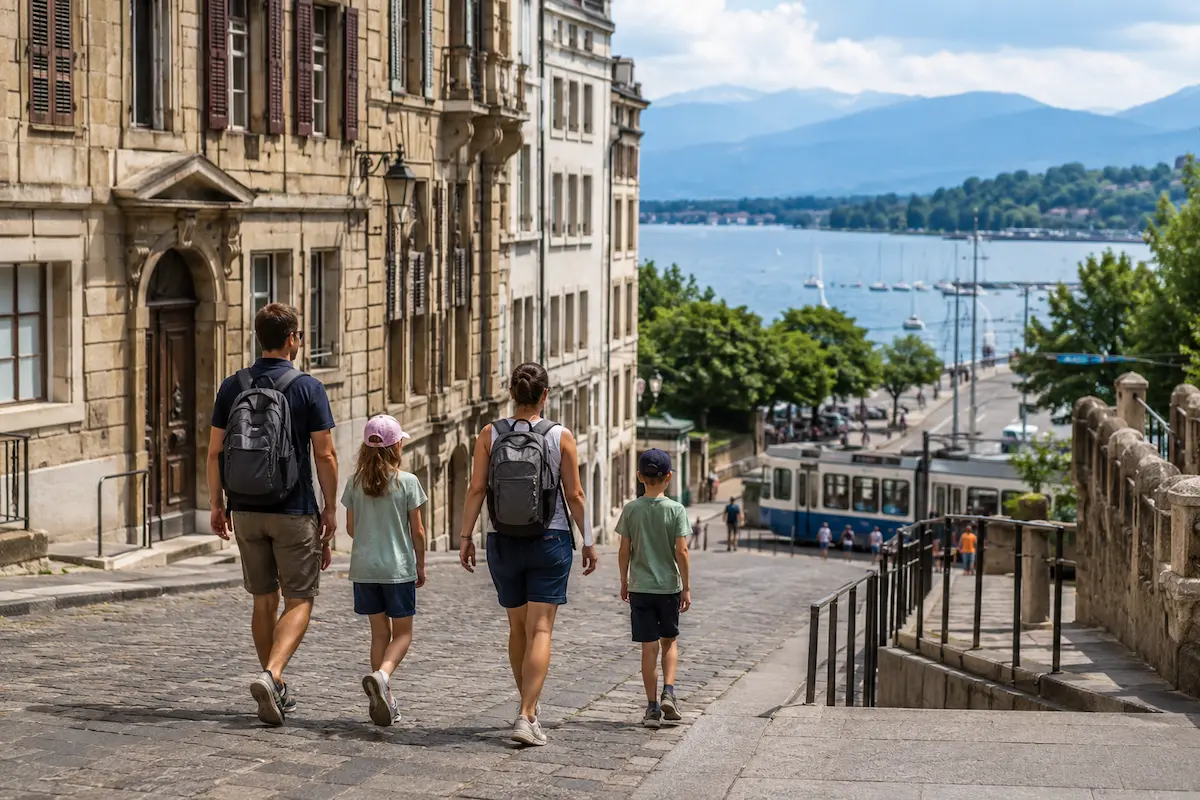
Likewise, a long museum or CERN session may leave children mentally tired even if they have not walked far. “Energy” includes attention as well as distance.
Do Not Stack Two High-Friction Attractions Just Because They Fit on the Clock
CERN and a UN tour can sometimes look compatible when you compare only opening times. The practical problem is everything around those times: transport, registration, security, on-site availability and the possibility that children are simply done earlier than expected.
That does not mean the combination is impossible. It means it should be a deliberate high-commitment day, not the default recommendation. The existing TripFinch one-day guide similarly treats CERN as a replacement-scale block rather than another quick stop on a compact central-city sequence.
A Quick Decision Guide for Common Family Scenarios
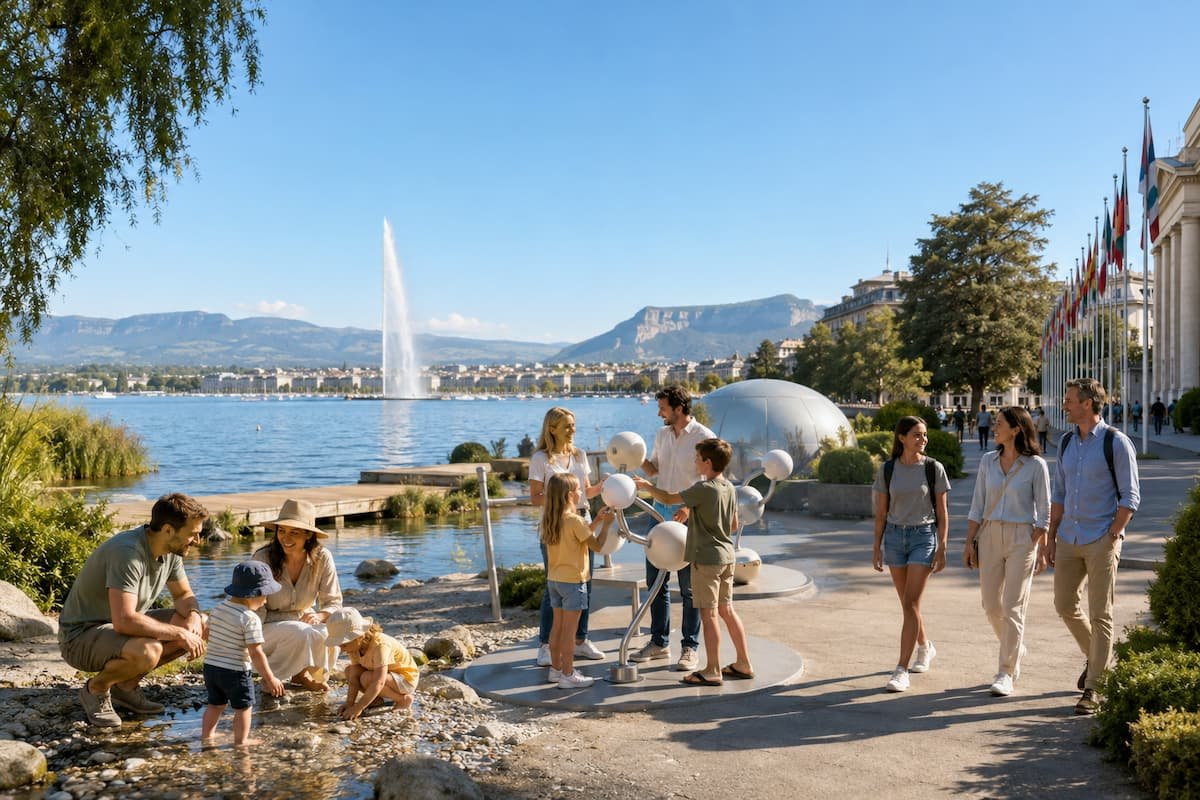
Under 6 + good weather + low energy: keep the day mostly flexible. Combine a short lakefront section, a Mouette crossing and a park or playground. Add a young-child CERN activity only if the specific daily program genuinely fits.
Ages 8–13 + rain + medium energy: CERN Science Gateway is a strong anchor if science interests the child. For a smaller commitment, use the Musée d’Histoire des Sciences; the Red Cross Museum becomes more attractive when the child will engage with its subject matter rather than simply needing shelter.
Age 14+ + strong science interest + plenty of energy: build the day around CERN and check the current guided-tour program. Treat an on-site guided slot as a bonus rather than a guarantee.
Mixed ages + no reservations: favor attractions that do not fail when one child needs to leave early. A lake/Mouette block plus a flexible museum is safer than depending on a same-day UN tour or assuming CERN entry will still be available without advance registration.
Pick the Constraint First, Then the Attraction
For Geneva with kids, start with the constraint that can eliminate options.
Age comes first because it changes what children can meaningfully do at CERN and whether the UN is available at all. Weather comes next because it changes the outdoor shortlist. Then use energy to decide how much walking or fixed attention the family can handle. Only after that should you choose which reservation deserves control of the day.
That process usually produces a shorter list than “things to do in Geneva with kids.” It also produces a day that is much more likely to work.