United Nations Geneva Tour: Booking, Security and What Renovations Change
Start with the calendar: United Nations Geneva tour tickets for individual visitors are released on the 20th of each month for the following month. After booking, complete the UN access-badge step required by your ticket; the FAQ explicitly requires registration from age 14 onward. Bring a valid passport from a UN Member or Observer State or a Schengen-zone ID card, and reach Pregny Gate 30 minutes early. Renovations and official meetings can change the route.
The practical sequence is easy to miss because booking and building access are separate steps. Secure the tour first, complete the badge process as soon as the ticket arrives, then plan your arrival around security rather than around the published tour start alone. The visit itself lasts about one hour, but the rooms you see are not guaranteed.
Last verified: August 2026. Tour availability, fees, access rules, transport conditions, and renovation impacts can change. Recheck the official UN Geneva visitor page shortly before your date.
When United Nations Geneva Tour Slots Open—and What to Do Right After Booking
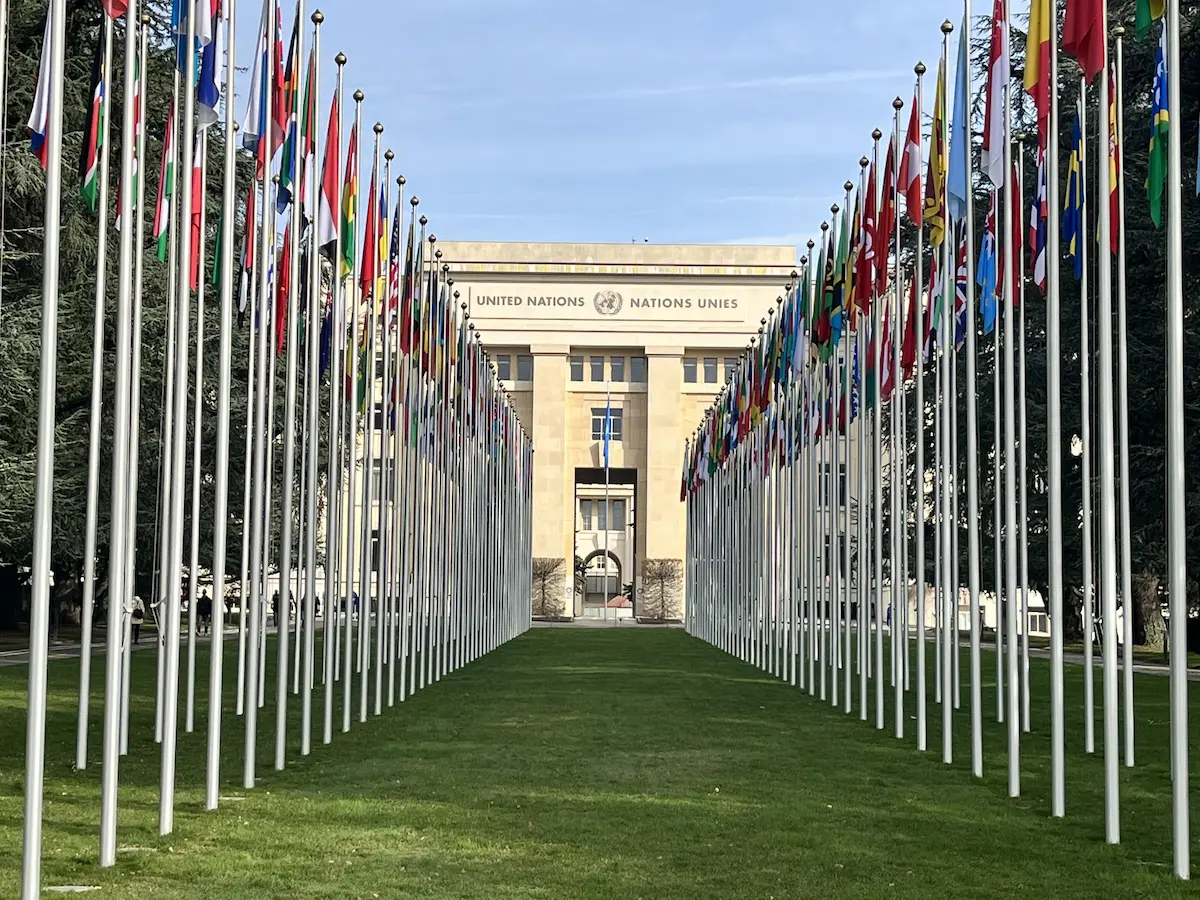
Photo: TomIsNotResponding / Wikimedia Commons, CC0.For an individual visitor planning a United Nations Geneva tour, the date that matters first is the 20th. UN Geneva says it releases individual-tour availability once a month, on the 20th, for the following month. It also warns that these places are limited and can sell out quickly.
That creates a different planning pattern from attractions that publish a long calendar months ahead. If your Geneva dates fall in September, for example, the first official release point to watch is August 20. That does not mean every date or time will be available; it means the next month’s individual slots are released then.
The current standard adult fee is CHF 25, with different rates for some students, seniors, disabled visitors, and young people. Online booking and payment platform fees also apply. Treat those figures as August 2026 information rather than a permanent price.
Individual Visitors: The 20th-of-the-Month Release
Individual visitors join a mixed group. UN Geneva also lists separate formats for groups of 15 or more and exclusive visits for small groups of up to nine people. The booking flow asks you to choose the date and time, enter participant and contact information, and pay online; the FAQ currently says credit cards are the accepted payment method.
For a first-time visitor with fixed travel dates, the useful rule is not simply “book early.” It is more precise: check the official booking platform when the monthly release happens, then choose from the actual inventory. Checking repeatedly weeks before that release may show no availability simply because the next month’s individual slots have not opened yet.
Your Ticket Is Not the Final Access Step
UN Geneva’s main visitor page broadly tells every person in the group to register through the link on the ticket, while its guided-tour FAQ specifically says badge registration is required from age 14 onward. For a child under 14, follow the instructions attached to the booking rather than guessing which registration step applies.
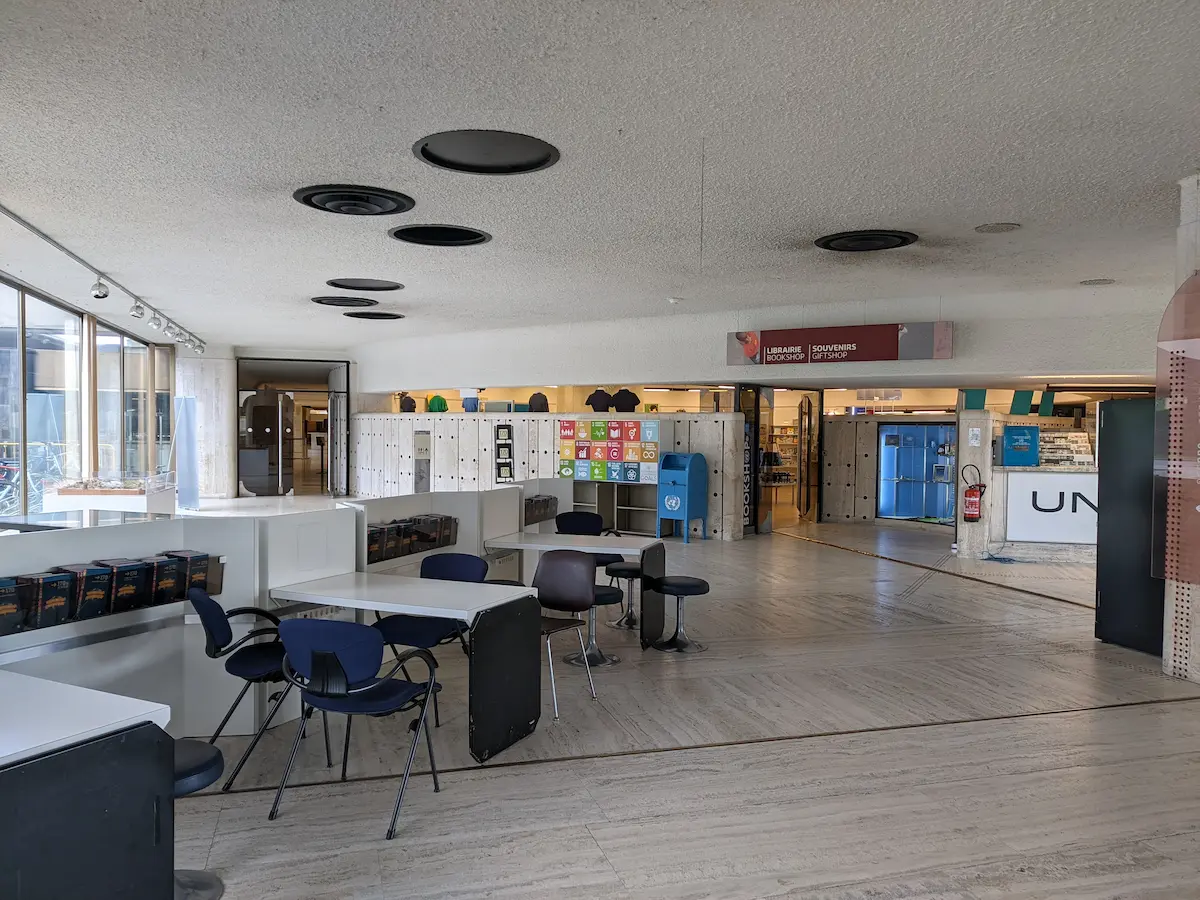
Photo: Unnerving duck / Wikimedia Commons, CC BY-SA 4.0. Cropped and converted to WebP.The registration produces a digital badge with a QR code sent by email. Keep that code accessible on your phone or print it. It is scanned when you enter the Palais des Nations.
So the booking sequence is:
- Secure the tour slot.
- Follow the access-badge link on the ticket and complete the registration promptly.
- Save the digital badge and bring the required identification on tour day.
Buying the tour but leaving the badge step unfinished creates an avoidable access problem. The ticket confirms the visit; it does not replace the security credential used to enter the UN site.
Your Arrival Timeline: Pregny Gate, ID and the 30-Minute Security Window
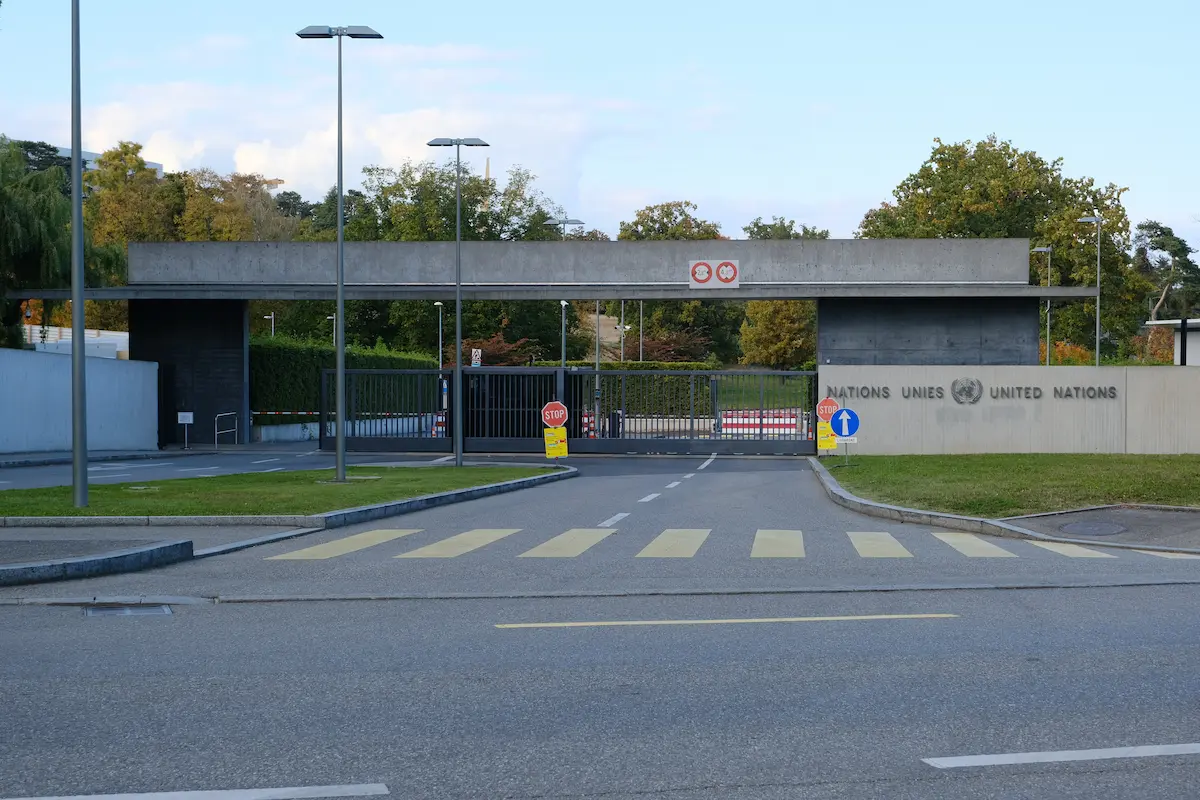
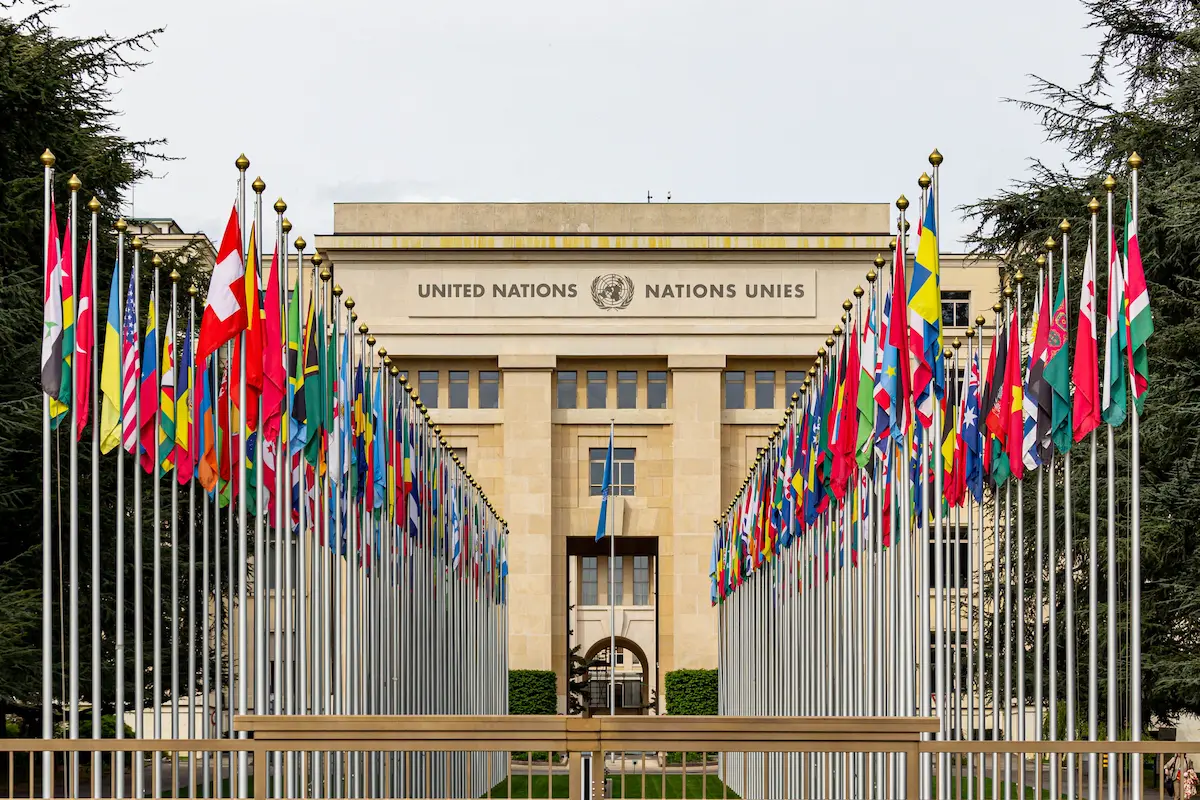
United Nations Geneva tour visitors enter through Pregny Gate at 14 Avenue de la Paix. UN Geneva identifies this as the visitors’ entrance, opposite the International Committee of the Red Cross and beside the Geneva Hotel School.
The official instruction is to be at the meeting point stated in the booking confirmation 30 minutes before the tour. That time is for security screening and the transfer to the Visitors’ Center. In practical terms, the 30 minutes should not be treated as your transportation buffer; it starts after you have successfully reached the correct entrance.
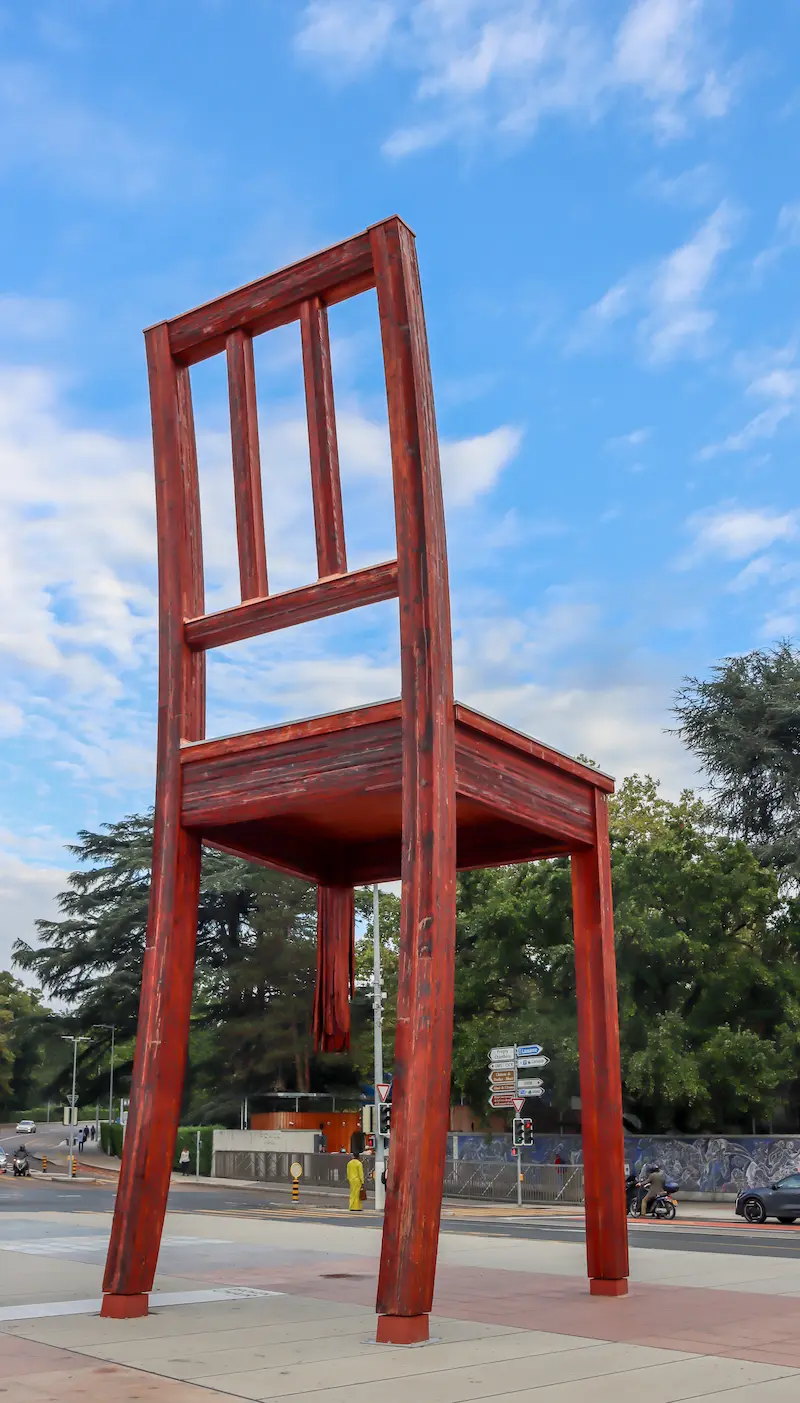
This matters more during the current Tram des Nations works. UN Geneva warns that roadwork around the Palais can affect car access and public transportation and advises allowing extra travel time. If you are coming from Cornavin station, the official page currently lists buses 8, 20, and 60 to Appia, or bus 5/tram 15 to Nations followed by about a five-minute walk to Pregny Gate.
If accommodation location is still undecided, compare the transport tradeoffs in our where to stay in Geneva guide before setting your arrival buffer.
Which ID the UN Currently Accepts
UN Geneva currently requires all visitors to carry either a valid passport issued by a UN Member or Observer State or a Schengen-zone ID card. The document is checked at the entrance.
Bring one of the identification documents UN Geneva explicitly lists, together with the digital access badge from your email.
Security rules also affect luggage. UN Geneva allows luggage only up to 55 × 40 × 20 cm and says large items cannot be brought into the Palais. Geneva Tourism likewise warns visitors not to arrive with luggage or large bags.
Why the 30-Minute Buffer Is Part of the Visit
The 30-minute instruction is operational, not a generic “arrive early” suggestion. UN Geneva specifically assigns that window to screening and transfer to the Visitors’ Center.
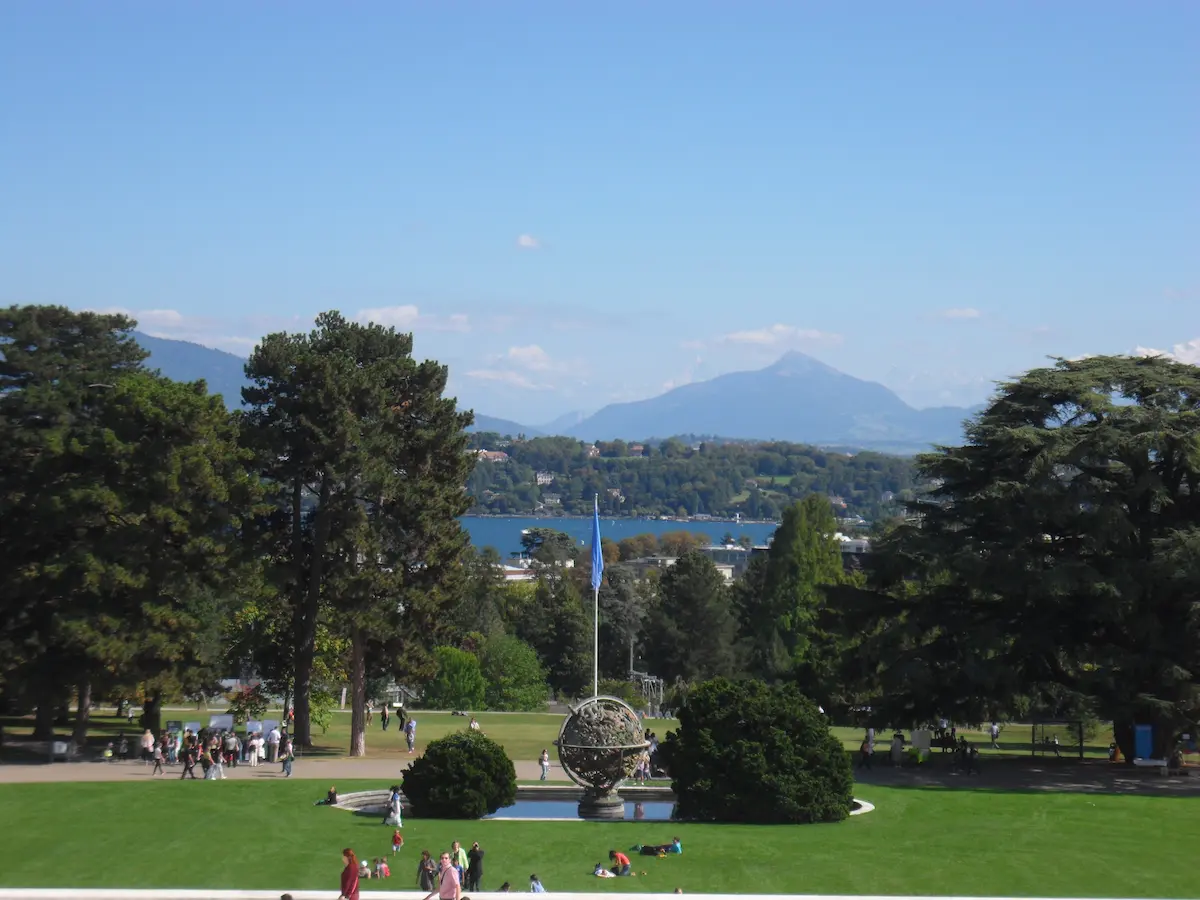
Photo: Mourad Ben Abdallah / Wikimedia Commons, CC BY-SA 3.0. Cropped and converted to WebP.There is another physical factor to consider: the Palais tour involves about 2 km (1.24 miles) of walking. UN Geneva says the ongoing renovation can also make parts of the route harder to access for people who need assistance. Visitors with mobility concerns should check the current accessibility information before their date rather than assuming every historic area will be reachable in the same way.
A practical arrival plan therefore has two buffers: enough transportation time to reach Pregny Gate despite current works, then the separate 30-minute UN security window. If you are organizing the rest of the day around this visit, the Geneva one-day itinerary places the international district after Old Town and the lakefront without backtracking. Combining both arrival buffers into a single 30-minute margin is the mistake to avoid.
What the Tour Can Include—and What Renovations or Meetings Can Change

The official United Nations Geneva tour lasts approximately one hour. UN Geneva says the visit can cover the organization’s work, the history of the Palais des Nations and the League of Nations, conference rooms in historic parts of the complex, Ariana Park, the renovated celestial sphere, the Sustainable Development Goals, and an explanation of how UN conferences operate.
The important word is “can.” The Palais is still a working diplomatic complex. UN Geneva states that meetings can affect the route and schedule, with some rooms becoming inaccessible without prior notice. Geneva Tourism makes the same operational point: the conference program can cause the tour route to change without notice.
What the Official Tour Currently Highlights
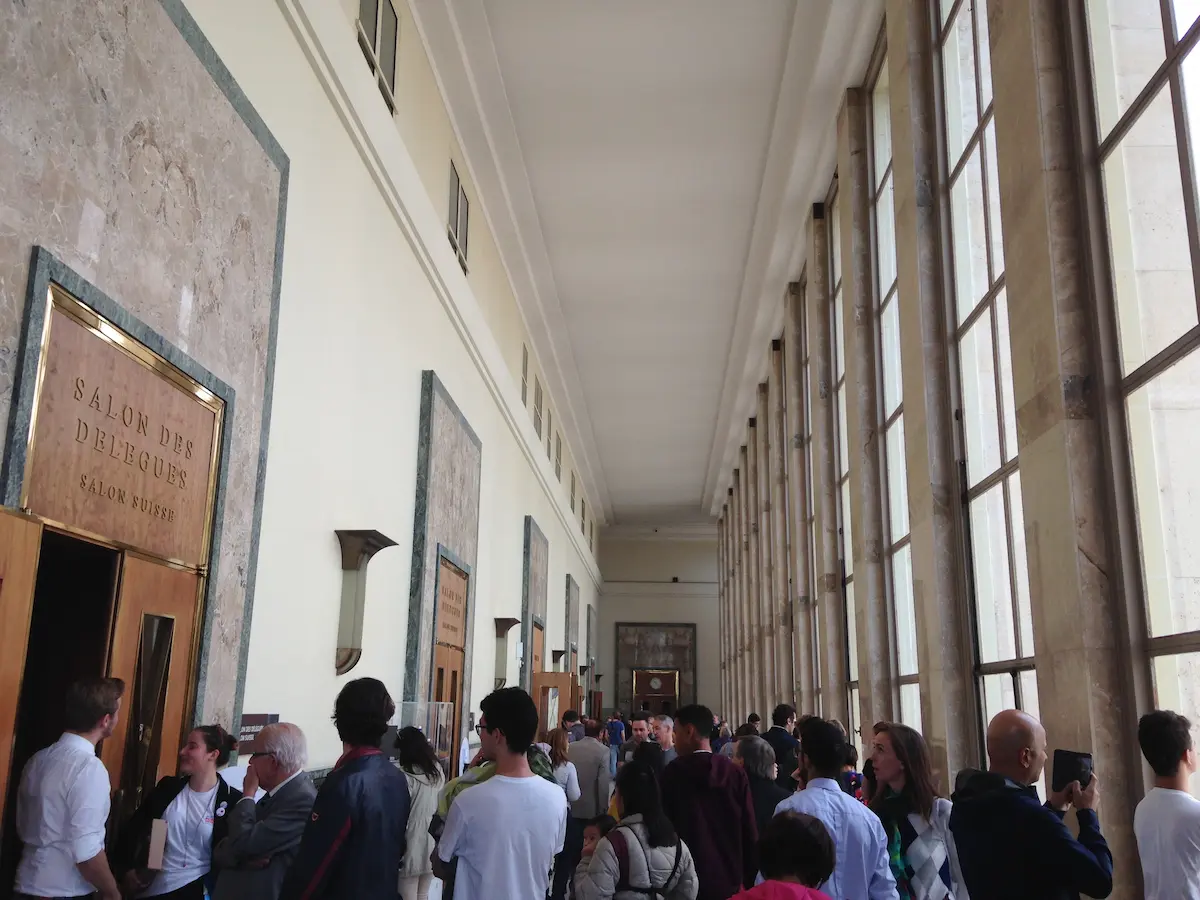
Photo: Mourad Ben Abdallah / Wikimedia Commons, CC BY-SA 4.0. Cropped and converted to WebP.If you book the United Nations Geneva tour because you want to understand the UN’s Geneva operation and see the Palais from inside, the official program supports that expectation. A standard visit is designed around the institution, the building’s history, conference activity, and selected spaces rather than one guaranteed room.
The official visitor page states that it is the official and only website for guided tours of the United Nations Office at Geneva. That is the useful distinction when search results mix official Palais access with outside sightseeing products: use the UN booking channel for the tour that enters the Palais des Nations.
If you are also planning a CERN Geneva visit, note that CERN uses a different booking system, so treat the two institutional visits as separate reservations.
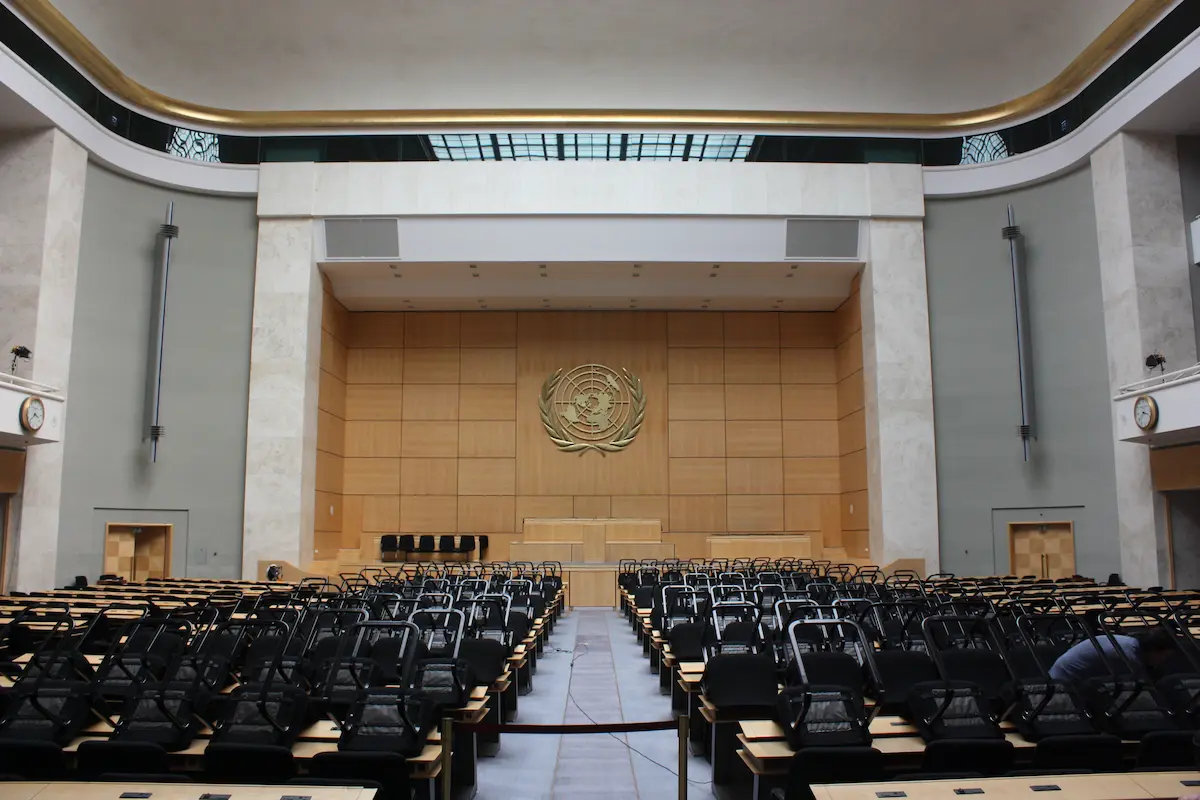
The visit is also more physically substantial than its one-hour duration might suggest. The published walking distance of roughly 2 km means the experience is not just a short indoor presentation at the entrance.
Why You Should Not Build the Visit Around One Specific Room
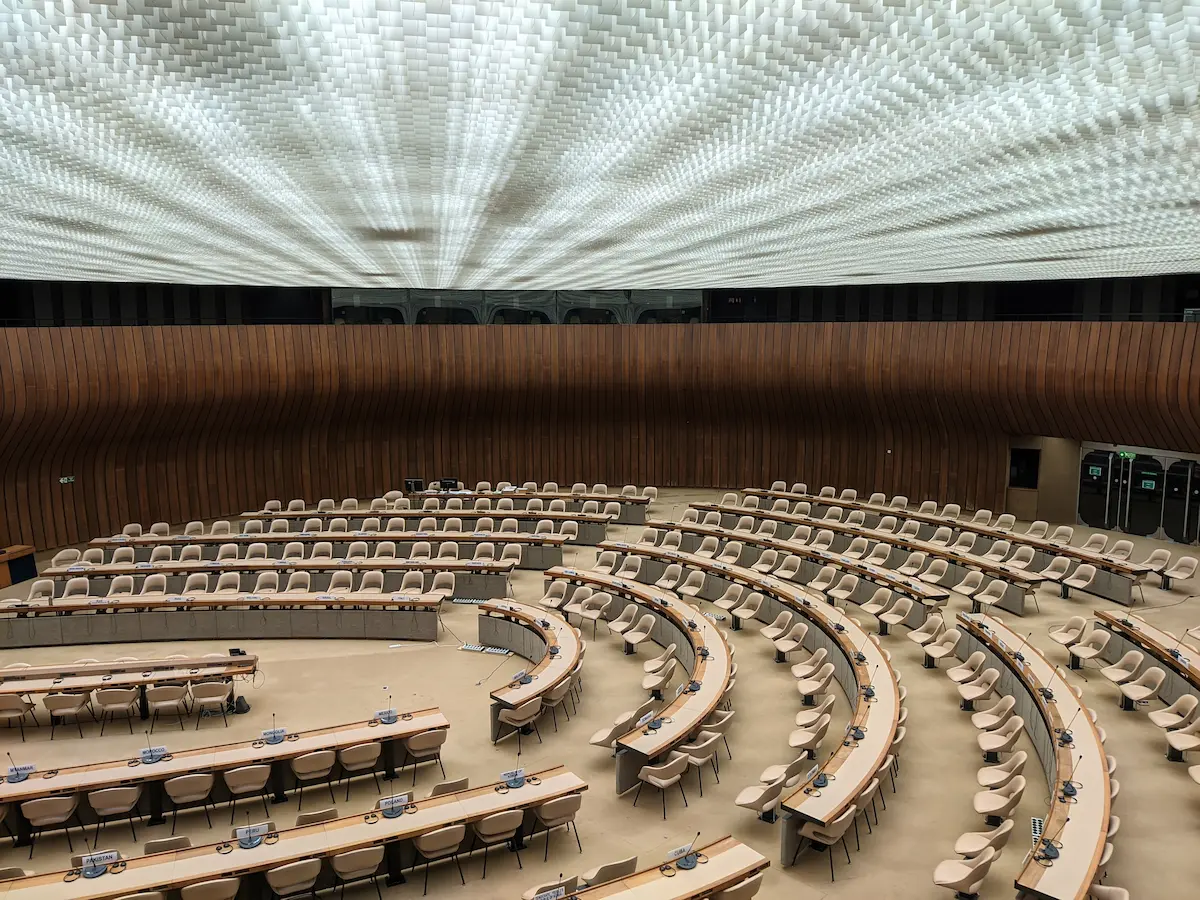
Photo: Unnerving duck / Wikimedia Commons, CC BY-SA 4.0. Photographed in February 2024 before Building E closed for renovation.The current renovation program explains why room-level promises are unreliable. The UN’s Strategic Heritage Plan is a multi-year modernization of the Palais, scheduled to finish in 2028. Building A, including the Assembly Hall, reopened in July 2025 after renovation, while Building E closed for renovation in September 2025.
That sequence changes which spaces can be operational at a given time. The UN has also reconfigured temporary conference capacity while Building E is closed. A photograph or trip report showing a particular room does not prove that room will be on your own route.
The same is true even without construction. Because delegates use the same complex for official meetings, the Visitors’ Service may close at short notice, and meetings can change the route or make individual rooms unavailable.
The better expectation is therefore specific but flexible: book the official tour to enter the Palais and learn how the Geneva office works, while treating the exact room list as variable. If one named hall is the sole reason for your visit, check the official visitor information again close to the date and be prepared for a different route.
The Order to Lock In Before You Go
First, if you are planning a United Nations Geneva tour as an individual visitor, check availability on the 20th for the following month and secure a slot that fits your Geneva dates.
Second, as soon as the ticket arrives, complete the access-badge registration required for eligible participants, save the QR code, and confirm that you have an accepted passport or Schengen ID card.
Third, on tour day, reach Pregny Gate with enough transportation margin to begin the separate 30-minute security process on time. Keep your expectations flexible about individual rooms because renovation work and official meetings can change the route.
If your Geneva dates are fixed, put the 20th-of-the-month release date on your calendar first; every other step depends on securing the official slot.