How to Get Around Interlaken: Ost, West, Guest Card and Trains
If you are deciding how to get around Interlaken, use three steps: choose whether to walk or use local transport inside town, pick Interlaken Ost or West for the next network, then check whether the Guest Card covers the trip or you need another ticket or pass.
Routes, discounts, and timetables can change. Check the live SBB timetable before travel, especially for evening connections or construction periods.
Start With the Destination, Not the Transport Pass
The fastest way to understand Interlaken public transport is to work backward from where you are going.
| Trip | First move | Main hub | What the Guest Card does | What to check next |
|---|---|---|---|---|
| Central Interlaken | Walk or use local transport | Nearest useful stop or station | Covers local public transport within its validity area | Nothing extra if the whole trip stays covered |
| Grindelwald | Get to Interlaken Ost | Ost | May cover the local ride to Ost when it is inside the validity area | Ticket or pass validity for the Bernese Oberland Railway |
| Lauterbrunnen | Get to Interlaken Ost | Ost | May cover the local ride to Ost when it is inside the validity area | Ticket or pass validity for the Bernese Oberland Railway |
| Lake Brienz boat | Reach the Ost jetty | Ost | Gives 20% off the BLS “day pass Lake Thun and Brienz”; it does not make the boat day free | Current fare and timetable |
| Lake Thun boat | Reach the West jetty | West | Gives the same 20% day-pass discount | Current fare and timetable |
That distinction prevents a common planning mistake: buying or activating a regional or national product before deciding which local leg, station, and operator the day actually uses.
How to Get Around Interlaken on Foot or by Local Transport
Interlaken’s central area can be handled on foot, so a free local ride is not automatically the better choice. If your hotel, restaurant, riverfront stop, and departure station are already on a practical walking line, walking can remove waiting and an unnecessary transfer. Interlaken Tourism explicitly includes walking among the practical ways to move around the town.
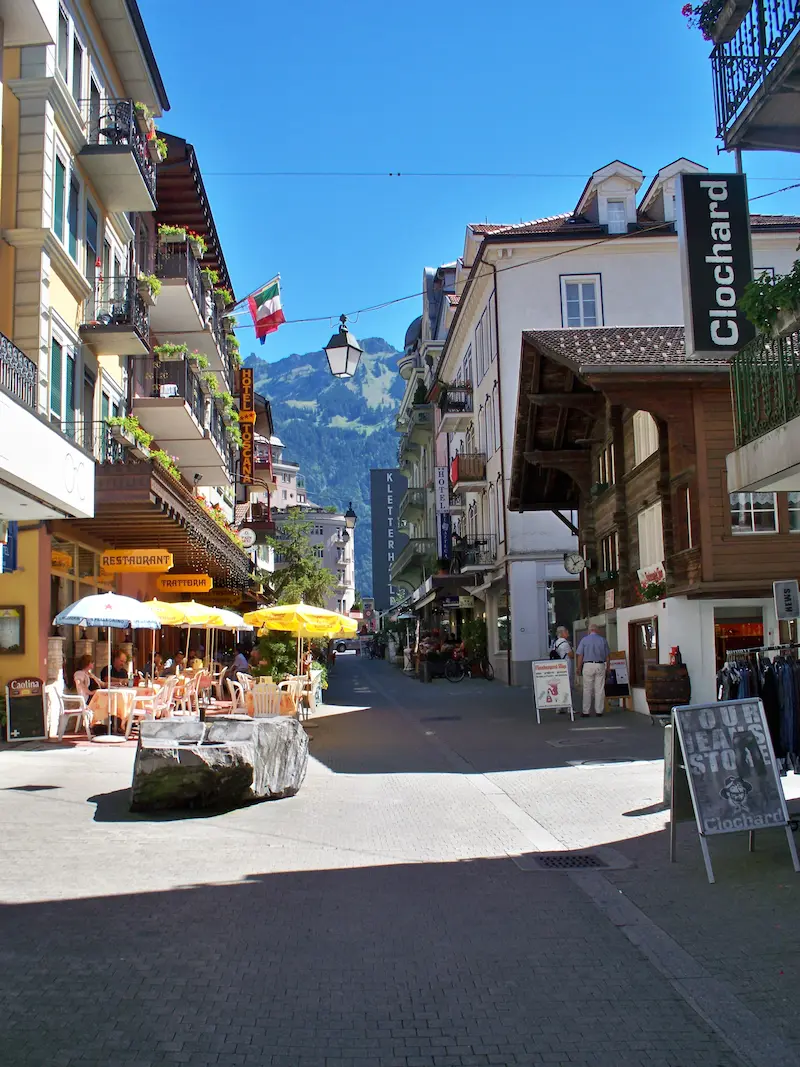
Use local transport when it solves a real problem: luggage, limited mobility, poor weather, a hotel farther from the station you need, or a connection where repositioning on foot would add stress. The Guest Card changes the cost of covered local transport, not the geography.
This also means “free transport” should not dictate every short trip. Start with the route, then use the card when transit actually improves it.
Interlaken Ost vs West: Pick the Hub for Your Next Leg
Ost and West are not rival versions of the same station. They matter because different onward networks line up with them.
If station choice is also shaping your accommodation decision, the separate TripFinch guide to where to stay in Interlaken compares Ost, West, and Unterseen from that angle. For getting around, the simpler rule is to match the station to the next leg.
Use Ost for Grindelwald, Lauterbrunnen, and Lake Brienz
The Bernese Oberland Railway starts its valley service from Interlaken Ost. The normal operating pattern sends two train portions together as far as Zweilütschinen, where one continues toward Lauterbrunnen and the other toward Grindelwald.
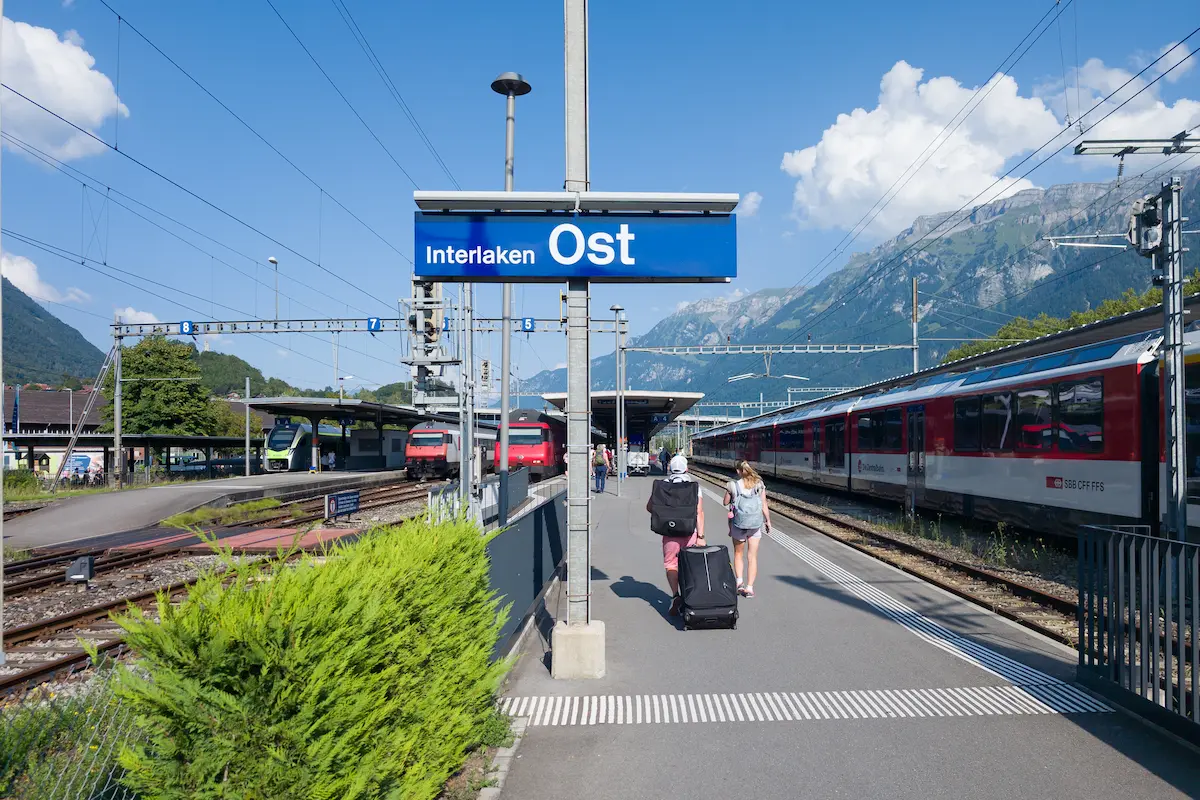
Ost also lines up with Lake Brienz. Interlaken Tourism identifies Interlaken Ost as one of the jetties where a Lake Brienz excursion can begin. That makes Ost a useful hub for two different systems: the rail branches into the Lütschinen valleys and the boat network on the eastern lake.
Use West for Lake Thun
Lake Thun points you the other way. Scheduled boat trips leave from Interlaken West and continue along the lake toward stops such as Beatenbucht, Spiez, and Thun.
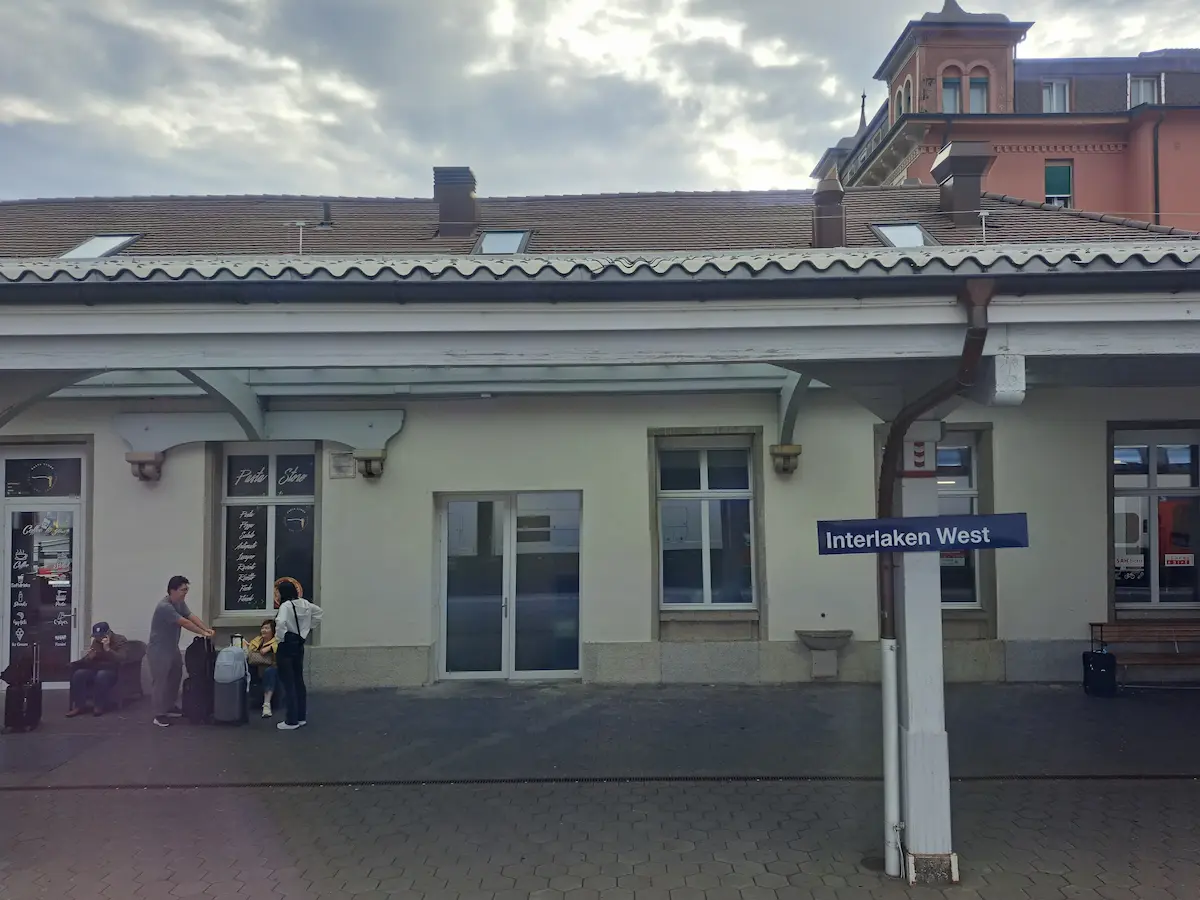
That does not make West “better” for Interlaken as a whole. It makes West the logical hub when the next leg belongs to Lake Thun or another western-side connection.
What the Interlaken Guest Card Actually Covers
The Interlaken Guest Card is a local benefit for eligible overnight guests, not a regional unlimited-travel pass. Your host provides it, and it includes public transport within the official validity area.
The current rules make several boundaries worth remembering:
- Local public transport is included within the validity area.
- The card currently gives 20% off the BLS “day pass Lake Thun and Brienz”; it does not make a lake-cruise day free.
- A separate ticket is required for a bicycle.
- Dogs are not covered by the Guest Card.
- Guest Card benefits cannot be combined with offers such as the Swiss Travel Pass, Bernese Oberland Pass, Half-Fare Travelcard, or GA Travelcard.
Check the official Interlaken Guest Card page before your stay because validity and discounts can change.
The practical distinction is local versus onward travel. A covered bus ride to a station may cost you nothing extra, while the train, mountain railway, or boat that begins the excursion can have a different fare rule.
How to Get to Grindelwald or Lauterbrunnen from Interlaken
Start at Interlaken Ost for the Bernese Oberland Railway. The standard pattern is unusually useful to understand before boarding: two train portions can run coupled from Ost to Zweilütschinen, then separate for the Grindelwald and Lauterbrunnen branches.
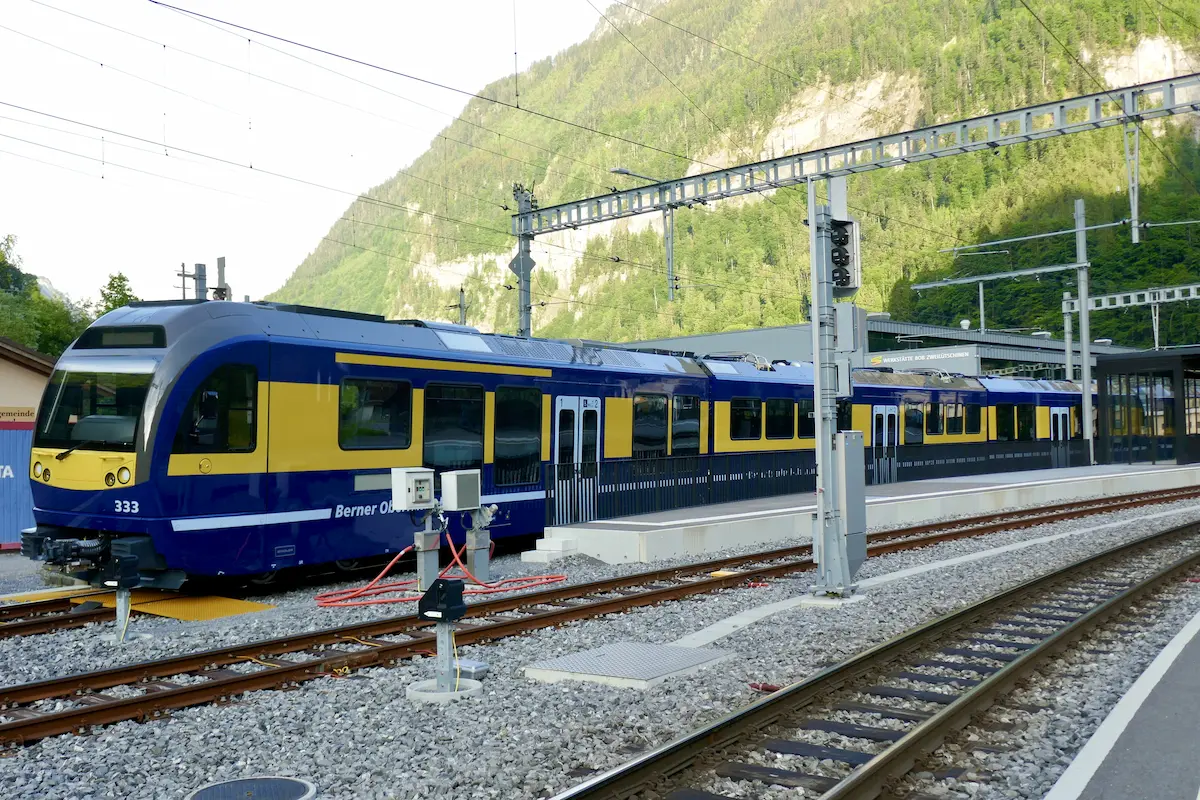
Do not reduce that to “take any BOB train from Ost.” Check the destination shown for the portion you board and follow the current platform information. Train formation and operating details are live information, so the timetable on your travel date takes priority over a static guide.
For either valley, the planning sequence is the same: reach Ost, confirm that your ticket or pass covers the intended journey, then board the correct portion for your destination.
How Boats Fit Into Interlaken’s Transport System
The simplest mental model is to treat a lake boat as the next network after you reach the correct side of town. The Guest Card may discount the relevant BLS day pass, but “local transport included” does not turn the boat network into free local transport.
Lake Brienz Starts on the Ost Side
For Lake Brienz, use the Interlaken Ost jetty. The scheduled route connects the lake with stops including Bönigen, Ringgenberg, Niederried, Iseltwald, and Giessbach before continuing toward Brienz, depending on the service.
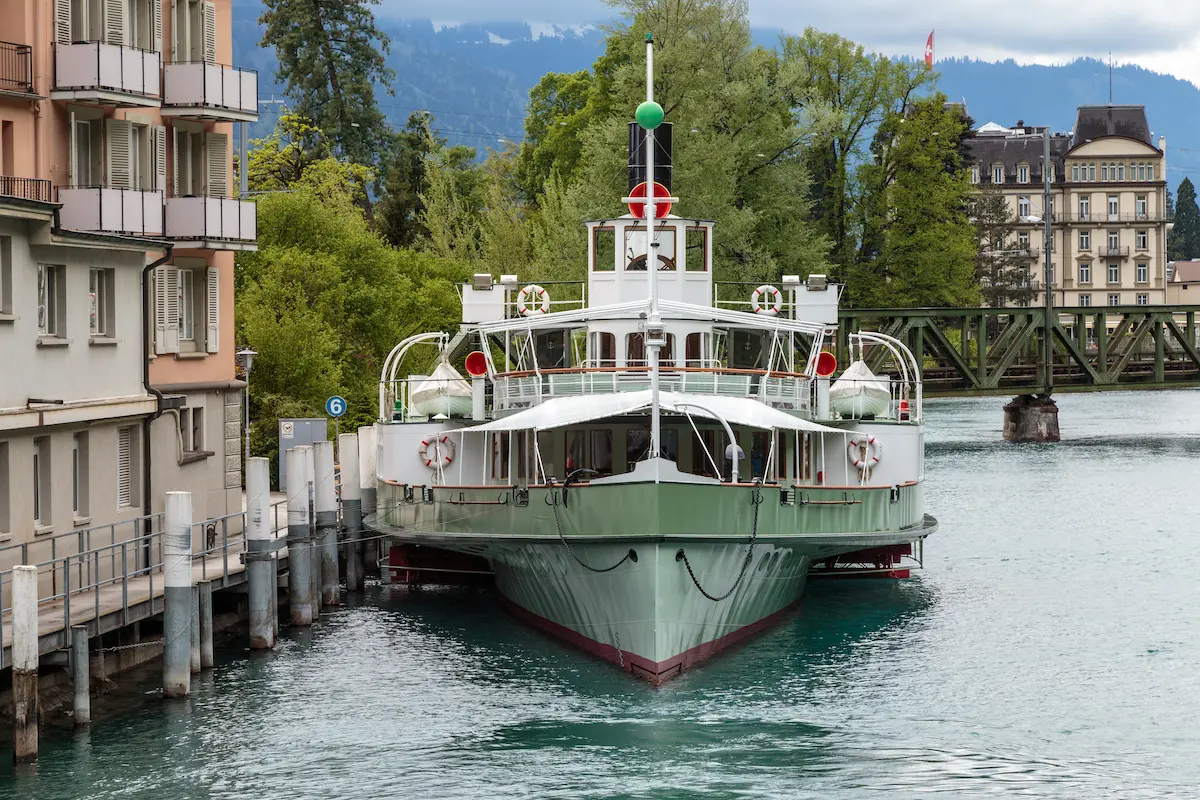
Boat schedules are seasonal and can be affected by operating conditions, so confirm the departure for your date instead of building a day around a fixed time copied from a guide.
Lake Thun Starts on the West Side
For Lake Thun, use Interlaken West. Services leave from West and run toward the western lake, with stops that can include Beatenbucht and Spiez before continuing toward Thun.
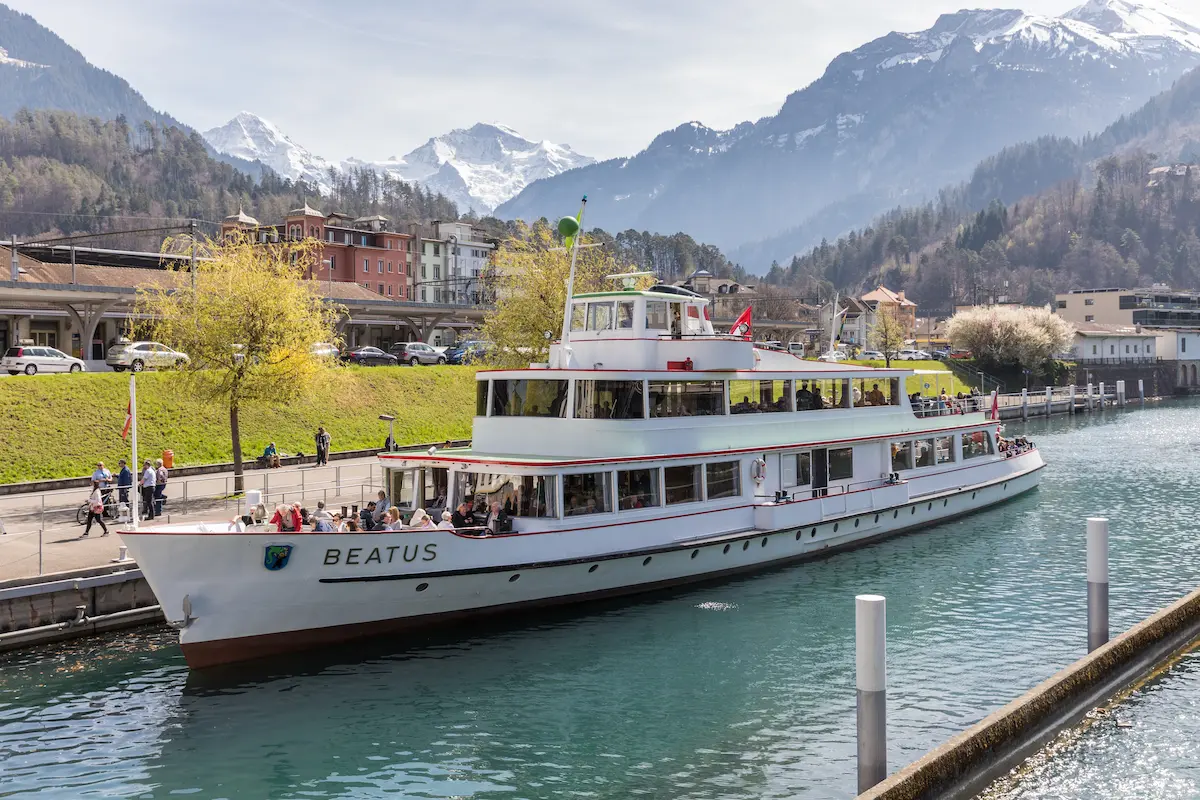
The station-to-lake rule is therefore easy to retain: Brienz pairs with Ost; Thun pairs with West. The fare rule is separate from that spatial rule.
When You Still Need Another Ticket or Pass
Before assuming the Guest Card or a national rail product settles the whole day, ask three questions in order:
- Is the first local leg inside the Interlaken Guest Card validity area?
- Which operator or network handles the next leg?
- Does your existing ticket, pass, or discount product cover that exact journey?
If your Switzerland itinerary extends well beyond Interlaken, the TripFinch Swiss Travel Pass vs Half Fare Card comparison handles the national product decision. Do not choose one only because Interlaken has buses, trains, and boats; calculate it from the wider itinerary.
Ticket coverage is also separate from reservation rules. If your wider trip includes services where that distinction matters, the Swiss train seat reservations guide explains when a valid ticket or pass still leaves another booking step.
September–October 2026 Service Note
Interlaken Tourism currently lists rail replacement buses between Spiez and Interlaken Ost from September 13 through October 9, 2026, on Sundays through Thursdays from 10:20 p.m. until the end of service. The online schedule has been updated.
If your trip falls in that window, check the live SBB timetable shortly before travel rather than relying on a generic journey time.
Do You Need a Car in Interlaken?
For a stay centered on Interlaken, Jungfrau Region rail trips, and scheduled lake boats, a car is usually unnecessary. Walking handles many short central movements, local public transport covers the local network, Ost connects into the Grindelwald/Lauterbrunnen rail system, and West connects naturally with Lake Thun.
A car becomes a separate itinerary choice when your accommodation or planned stops sit outside the public-transport pattern you intend to use. The key is not “car or no car” in the abstract. Decide the destinations first, match each one to Ost, West, or local transport, and only then decide whether public transport already covers the trip you actually planned.