Swiss Travel Pass vs Half Fare Card: Which One Fits Your Itinerary?
Pilatus charges CHF 84.00 for the full mountain round trip from Kriens, and CHF 42.00 for the reduced one. The reduced price applies to Half-Fare travelcard holders. It also applies to Swiss Travel Pass holders. Same number, same official price list (Last verified: July 2026, Pilatus-Bahnen).
That overlap settles more of the Swiss Travel Pass vs Half Fare Card question than either price tag does. Short answer: the Swiss Travel Pass wins when you cover long intercity legs on most days of a short, fast trip. The Swiss Half Fare Card wins when you move slowly, stay in one base, or build the trip around mountain excursions — because both cards discount those the same way.
What follows is mostly arithmetic. The Swiss Half Fare Card costs a flat CHF 150 for a month. The Swiss Travel Pass runs from CHF 254 to CHF 499 in second class, depending on how many days you buy. The gap between the two is the only figure that decides anything, and it converts cleanly into how much full-fare travel your route has to generate before the pass starts earning its price back. Prices, coverage and mountain discounts change, so treat every number here as a starting point and confirm it on the operator’s own site before you pay.
What Each Card Actually Covers
For a destination where pass coverage affects the final transfer, see getting to Zermatt before deciding how to arrive.
According to SBB, the Swiss Travel Pass covers unlimited travel by train, bus and boat, public transport in over 90 Swiss towns and cities, panorama trains (seat supplements excluded), free admission to more than 500 museums, and three mountains outright — Rigi, Stanserhorn and Stoos. Everything else on the mountain side lands at a discount of up to 50%. It sells in 3, 4, 6, 8 or 15 consecutive days, or as a Flex version with the same day counts spread across one month.
The Swiss Half Fare Card costs CHF 150 and runs for one whole month from the first day of validity. SBB describes it as halving or reducing fares on trains, buses, boats, panorama trains, mountain railways and gondola lifts, plus city transport in the same 90-plus towns. Two conditions catch people out. You can only buy it if your permanent residence is outside Switzerland and Liechtenstein — the same restriction the SBB applies to the Swiss Travel Pass, so it is not a tiebreaker between the two — and it is valid only together with an original passport or official ID during inspections.
| Feature | Swiss Travel Pass | Swiss Half Fare Card |
|---|---|---|
| Price (2nd class, adult) | CHF 254–499 by duration; Flex CHF 289–519 | CHF 150 flat |
| Validity | 3, 4, 6, 8 or 15 days (consecutive or Flex within a month) | One month |
| Trains, buses, city transport | Included, unlimited | Reduced fare on each ticket |
| Scheduled lake boats | Included | Reduced fare |
| Panorama trains | Included, supplements extra | Reduced fare, supplements extra |
| Rigi, Stanserhorn, Stoos | Fully included | Reduced fare only |
| Other mountain railways | Up to 50% off | Halved or reduced |
| Museums | 500+ included | Not included |
| Eligibility | Residence outside CH and FL required | Residence outside CH and FL required |
Read the mountain rows again, because that is where most of the confusion lives. Rigi is the outlier that gets quoted as if it were the rule — and it is genuinely free with the pass, which changes the math when you have Pilatus and Rigi compared side by side. On the rest of the network’s peaks, the two cards deliver roughly the same reduction, which means “I want to ride mountain railways” is not an argument for the pass.
Last verified: July 2026. Sources: SBB Swiss Travel Pass, SBB Swiss Half Fare Card, Pilatus-Bahnen.
The Break-Even Number That Decides It
The calculation takes three steps.
Subtract CHF 150 from the pass price. That is what the pass costs you extra. Since the Half Fare Card would have cut your tickets roughly in half anyway, every franc of that extra outlay has to be recovered at 50 cents on the franc — so double it. The result is the amount of full-fare travel your itinerary needs to produce before the Swiss Travel Pass comes out ahead.
| Swiss Travel Pass (2nd class) | Pass price | Extra vs Half Fare Card | Full-fare travel needed to break even | Per travel day |
|---|---|---|---|---|
| 3 days | CHF 254 | CHF 104 | CHF 208 | ~CHF 69 |
| 4 days | CHF 309 | CHF 159 | CHF 318 | ~CHF 80 |
| 6 days | CHF 399 | CHF 249 | CHF 498 | ~CHF 83 |
| 8 days | CHF 439 | CHF 289 | CHF 578 | ~CHF 72 |
| 15 days | CHF 499 | CHF 349 | CHF 698 | ~CHF 47 |
| Flex 3 days | CHF 289 | CHF 139 | CHF 278 | ~CHF 93 |
| Flex 4 days | CHF 349 | CHF 199 | CHF 398 | ~CHF 100 |
| Flex 6 days | CHF 424 | CHF 274 | CHF 548 | ~CHF 91 |
| Flex 8 days | CHF 459 | CHF 309 | CHF 618 | ~CHF 77 |
| Flex 15 days | CHF 519 | CHF 369 | CHF 738 | ~CHF 49 |
What that number looks like in practice
The four-day pass needs about CHF 80 of full-fare travel per pass day to break even against the Half Fare Card, while the six-day pass needs slightly more — about CHF 83 per day. The 15-day pass is the easiest threshold in the table: roughly CHF 47 a day can be reached with one modest intercity leg. Those are averages, so calculate from the journeys you will actually take rather than assuming a longer pass always has the highest daily hurdle.
The Flex version raises the bar rather than lowering it. You pay more for the same number of travel days, spread across a month instead of running consecutively, so each activated day has to work harder — the four-day Flex needs about CHF 100 of full-fare travel per activated day. Flex earns its premium when your trip has genuine gaps, not when you simply want reassurance.
Two adjustments before you trust your own total. Museums you would actually pay for count toward the pass side, since the Half Fare Card gives you nothing there. And Rigi, Stanserhorn and Stoos count at their full ticket price, because the pass covers them and the card does not.
Where the Pass Wins and Where the Card Wins
Same numbers, three different travelers.
Short trips with long intercity legs
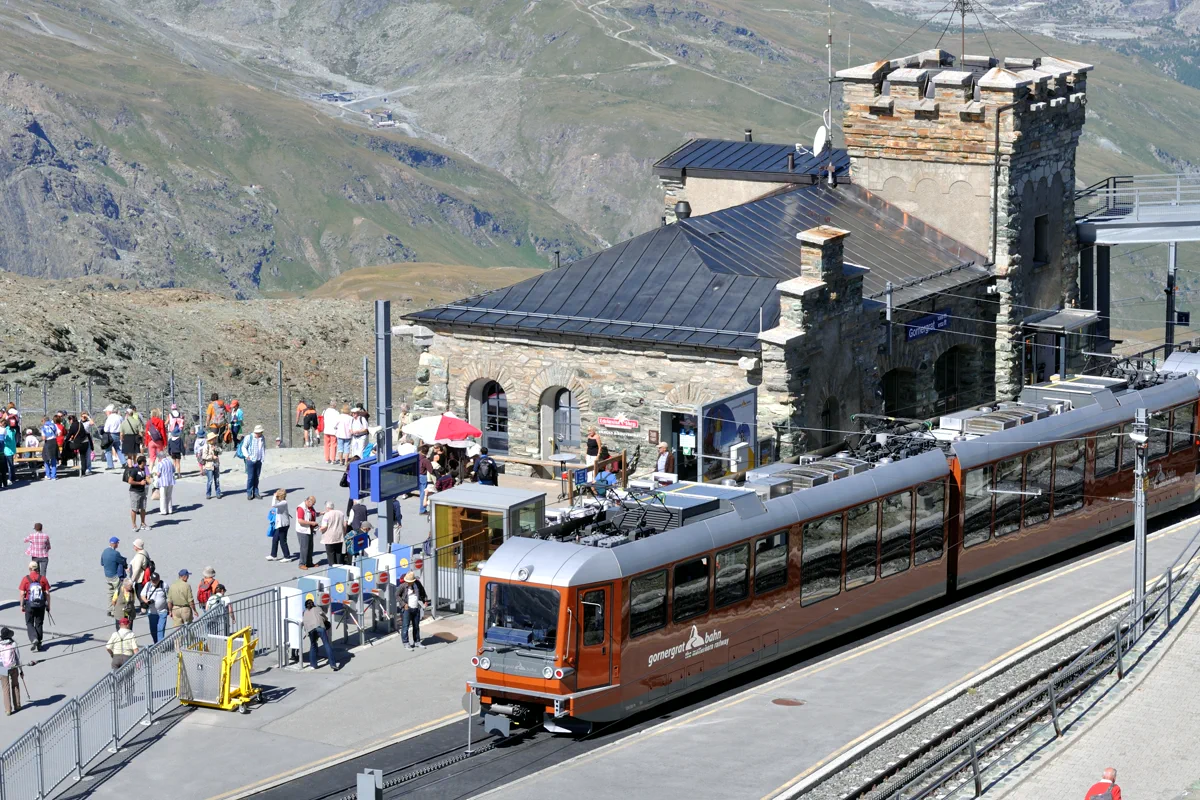
If your route is a chain of long hops — arrival airport to first city, first city to a second region, second region to a departure airport — you clear the threshold without effort, and the pass also removes the daily friction of buying tickets on a tight schedule. This is the profile the Swiss Travel Pass was built for. For the first arrival leg, the Zurich Airport to Lucerne guide shows when an active pass replaces a ticket and when a flexible fare is safer.
If your route is a chain of long hops — arrival airport to first city, first city to a second region, second region to a departure airport — you clear the threshold without effort, and the pass also removes the daily friction of buying tickets on a tight schedule. This is the profile the Swiss Travel Pass was built for. For the first arrival leg, the Zurich Airport to Lucerne guide shows when an active pass replaces a ticket and when a flexible fare is safer. If one of those stops is Geneva for CERN, the CERN Geneva visit guide explains what you can register in advance and what can only be booked after arrival.
The trap is assuming a short trip automatically qualifies. A three-day stay built on one long transfer and two days of local walking rarely gets anywhere near the CHF 208 of full-fare travel the three-day pass has to recover. Even a compact two-day Lucerne plan built around a single mountain rarely gets close.
Slow trips, one base, mountain-heavy days
Stay put and the pass has less to replace. Many Swiss towns hand overnight guests a local transport card at check-in — Lucerne’s free Visitor Card covers city buses and trains within fare zone 10 — so the pass would be buying you something you already hold.
Mountain days are the sharper case. A CHF 42 reduced mountain ticket costs CHF 42 either way. Do three of those in a week and the pass has saved you exactly nothing on the part of the trip you cared about most.
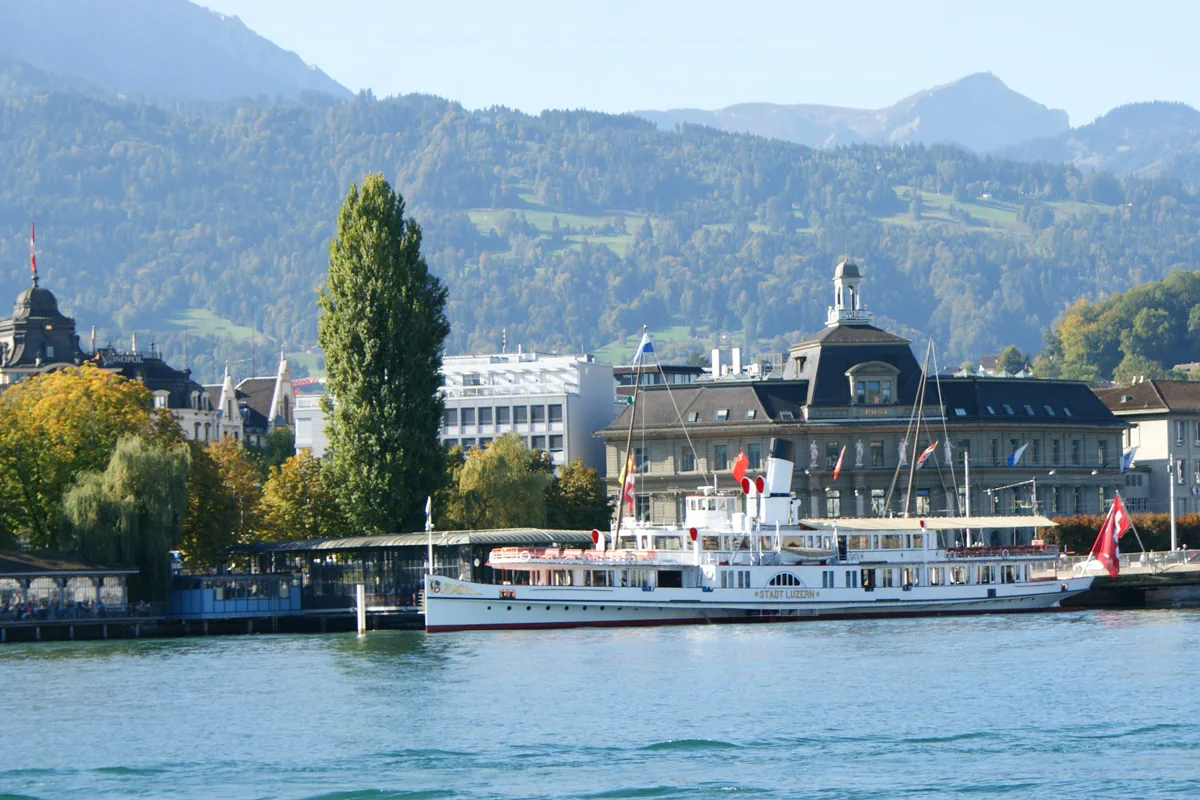
Scheduled lake boats are the real exception in this profile. Those are included outright with the pass and merely discounted with the card, so a trip with several Lake Lucerne boat days shifts the total meaningfully toward the pass.
Families, and what the Swiss Family Card changes
This one kills a widespread assumption. Both products come with the same Swiss Family Card: children aged 6 to under 16 travel free when accompanied by a parent who holds the product, and children under 6 travel free without a ticket at all. The Swiss Travel Pass has no family advantage over the Half Fare Card, because the benefit is identical.
For two adults and two children, that turns the decision into a straight comparison of two adult products — CHF 300 for a pair of Half Fare Cards against CHF 508 for a pair of three-day passes. The threshold doubles too, but so does the saving, so the arithmetic scales cleanly.
Costs Neither Card Removes
Some line items survive both products, and they are the ones that wreck a budget built on the assumption that a pass covers everything.
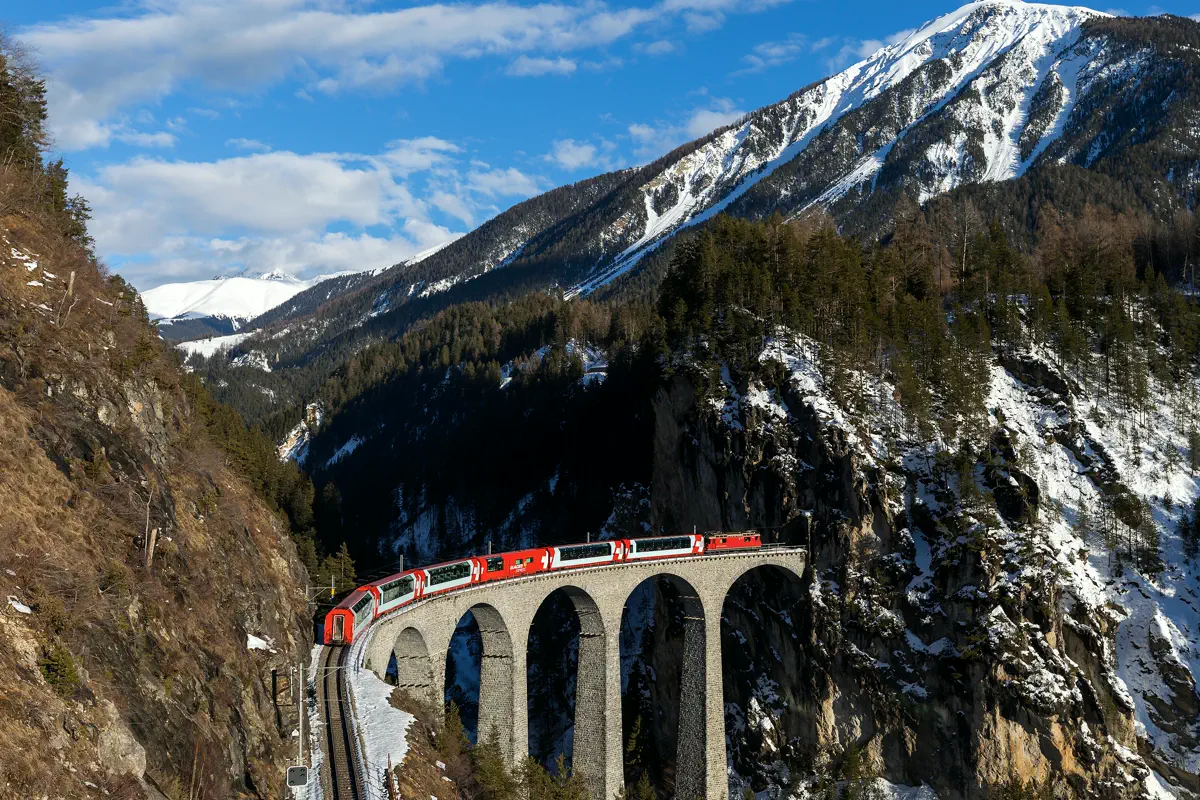
Seat reservations on the Glacier Express are obligatory and cost CHF 54 per passenger in first and second class, with the operator stating plainly that the charge is not covered by travel cards. Excellence Class runs CHF 540. Pass or card, you pay it, and it sits outside every break-even total on this page.
Not every reduction is a clean 50%. SBB’s own wording is that the Half Fare Card “halves or reduces” fares, and warns that short journeys, discounted tickets and combined offers can come in below half. The same caveat applies to the pass on high-altitude sections, where several operators publish their own reduced rate rather than a flat percentage. Check the mountain you actually plan to ride, on that operator’s price page, before either card goes into your total.
And local visitor cards do overlap. If your accommodation issues one, the city transport portion of either product is worth less to you than the marketing suggests. Basel is a practical example: our guide to where to stay in Basel shows how BaselCard coverage changes the lodging-location decision.
A transport pass does not replace a payment plan for restaurants and small purchases, so review the Lucerne payment rules separately.
Common Questions
Does the Swiss Half Fare Card work on mountain railways?
Yes — SBB lists mountain railways and gondola lifts among the services it reduces. On many peaks the resulting price is identical to the Swiss Travel Pass rate, Pilatus at CHF 42 being the clearest published example.
Do kids need their own Swiss Travel Pass?
Not if a parent holds either product. Both include the Swiss Family Card, which lets children aged 6 to under 16 travel free with an accompanying parent. Under 6 is free regardless. A child traveling alone under 16 gets a 50% reduction instead.
Is the Flex version worth the extra money?
Only if your trip genuinely has non-travel days. Flex costs CHF 20 to CHF 40 more depending on duration while giving you the same number of days, which pushes the break-even per activated day to roughly CHF 91–100 on the 3, 4 and 6-day versions, and to about CHF 77 and CHF 49 on the 8 and 15-day versions.
Can I buy a Half Fare Card if I live in Switzerland?
No. The Swiss Half Fare Card is restricted to people whose permanent residence is outside Switzerland and Liechtenstein. Residents buy the annual Half Fare Travelcard instead, priced at CHF 190 for the first year for adults aged 25 and over, and CHF 120 for travelers aged 16 to 24.
The One Number to Add Up Before You Buy
Still choosing your bases? Compare Zurich, Lucerne and Geneva for a first trip first, because that city choice determines how many long intercity legs go into the calculation.
Open a timetable, price the two or three longest intercity legs on your route at full fare, add any lake boat days and any museum you would genuinely pay to enter, and compare that single total against the row in the break-even table that matches your trip length. If it clears the line, buy the pass. If it does not — and for most trips built around one base or one mountain, it will not — the CHF 150 card does the same work for less.
Do it before you book the Glacier Express, not after. The CHF 54 reservation is charged either way, and knowing that in advance keeps it out of the column where it might tip a close decision the wrong way.