Where to Stay in Lucerne: Old Town, Station or Lakefront Compared
Your Lucerne hotel will hand you a free public transport card. It quits at the edge of fare zone 10 — and the address you booked is what decides whether you’re inside that line or outside it. That rule, not the hotel list, is where the decision actually gets made.
Short answer: where to stay in Lucerne comes down to three areas — the Old Town, the blocks around the train station, and the lakefront. The Old Town and station blocks are usually within about 5–10 minutes on foot; a lakefront property can be 10–20 minutes from the station depending on its exact address. All three remain walkable, but noise, luggage, the view from the window, and one fare rule separate them.
Four things actually change between the three: how far you drag a suitcase, how loud the night gets, what the window shows, and whether your address keeps that transport card working.
Where to Stay in Lucerne: The Three Areas, Side by Side
Lucerne is small enough that these areas overlap at the edges, which is why where to stay in Lucerne is a question about trade-offs rather than about distance.
| Old Town (Altstadt) | Around the station (Bahnhof / Neustadt side) | Lakefront (quays, east of the river mouth) | |
|---|---|---|---|
| Walk from the train platform, with a suitcase | ~5–10 min, over cobblestones and a bridge | 0–5 min, flat, mostly covered | ~10–20 min along a flat promenade, or one short bus ride |
| Distance to the Lake Lucerne boat piers | ~5–10 min on foot | Piers sit at Bahnhofquai, beside the station’s main exit | ~10–20 min on foot |
| Night noise | Highest — restaurant and bar density is concentrated here | Low to moderate; traffic and transit hum rather than crowds | Lowest of the three |
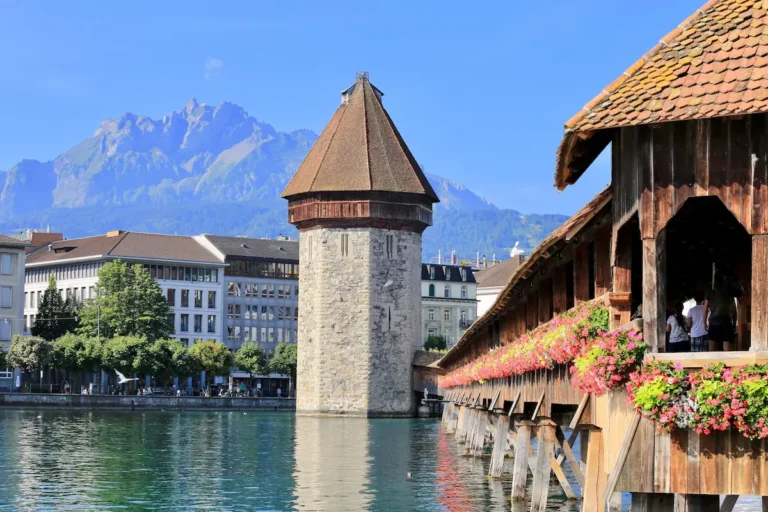
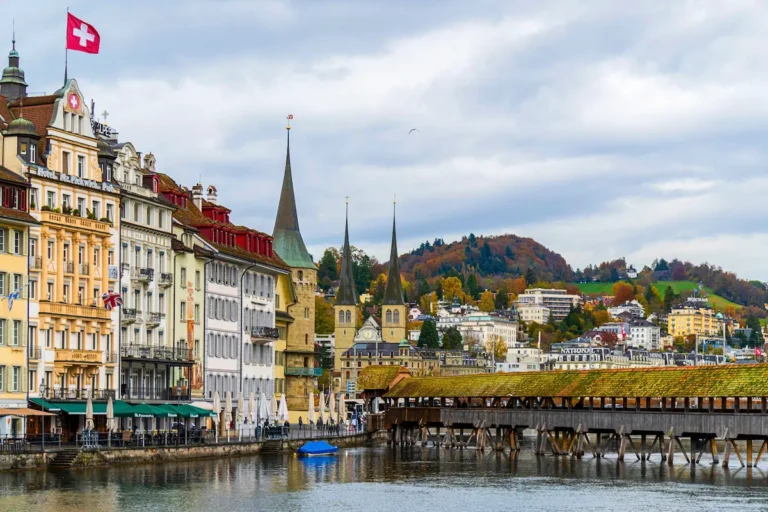
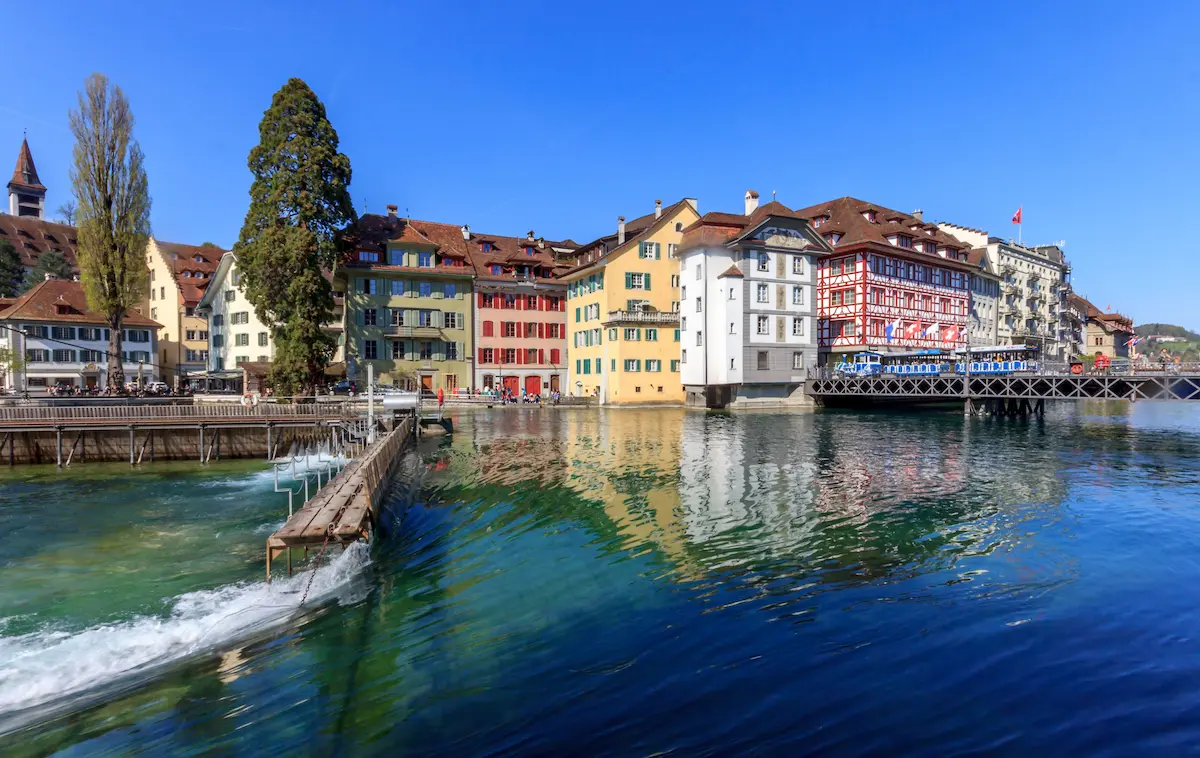
| What the window tends to show | River Reuss, painted façades, the Kapellbrücke area | Street, tracks, or courtyard | Open lake and the mountain ridge behind it |
| Fits | First visit, 1–2 nights, sightseeing on foot | Early departures, late arrivals, heavy bags, mountain day trips by boat or train | Slow trips, light sleepers, travelers who want the view more than the steps |
Hotel names, star counts, and nightly rates move constantly. The area does not — which is why it’s the part of the decision that survives your dates changing.
Common Questions About Where to Stay in Lucerne
Is the Old Town too noisy to sleep in?
It depends on which side of the building your room faces. The Old Town concentrates Lucerne’s restaurants and bars into a small pedestrian grid, so weekend nights are audible. Ask the property for a courtyard-facing room rather than a river-facing one — you trade the view for the sleep.
Do I need a car in Lucerne?
No. The Old Town is largely pedestrian, city hotel parking is limited and charged separately, and the areas compared here are all walkable from the station. A car mainly becomes a cost you park.
Is it cheaper to stay in Zurich and day-trip?
Sometimes on the room rate, rarely on the day. A Zurich base costs you roughly two hours of round-trip travel and the early-morning mountain slot, which is the part of a Lucerne trip most sensitive to weather and haze. If you’re staying two nights or more, base in Lucerne.
How many nights is enough?
Two covers the city plus one mountain day. One night works only if you accept that you’ll be choosing between the lake and the summit, not doing both.
If the stay leaves only one sightseeing day, the Lucerne one-day itinerary shows when to remain in Old Town, add a short cruise or use the day for one mountain.
What Each Area Gets Wrong
So which one is the mistake? Depends entirely on the trip you’re running.
Old Town: The View Costs You Sleep
The Old Town is what people picture when they book Lucerne — and it’s also the loudest of the three and the least forgiving to a rolling suitcase. The pedestrian core means vehicle access to your door is restricted, so the last leg from the station is on foot across a bridge, on stone.
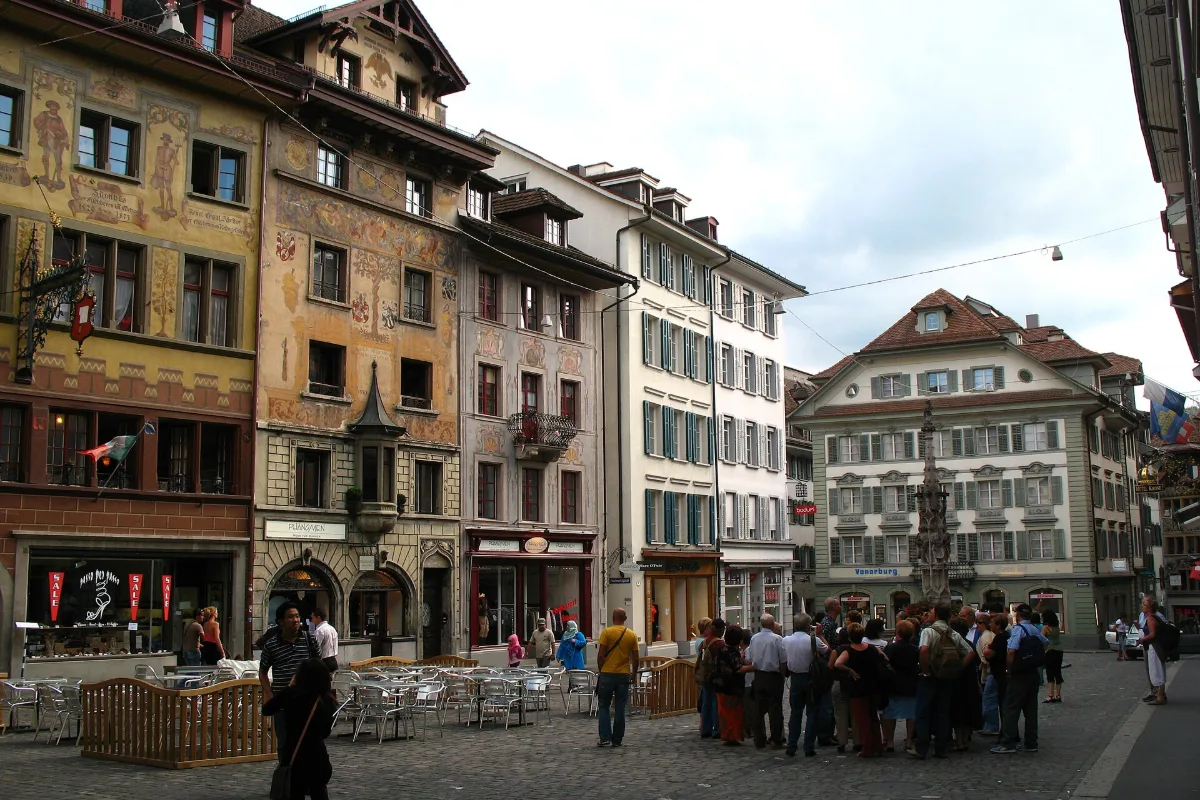
The cost of that last leg scales with your bags and your arrival time: negligible with a carry-on in daylight, real with checked luggage late at night.
Around the Station: Boring, and That’s the Point
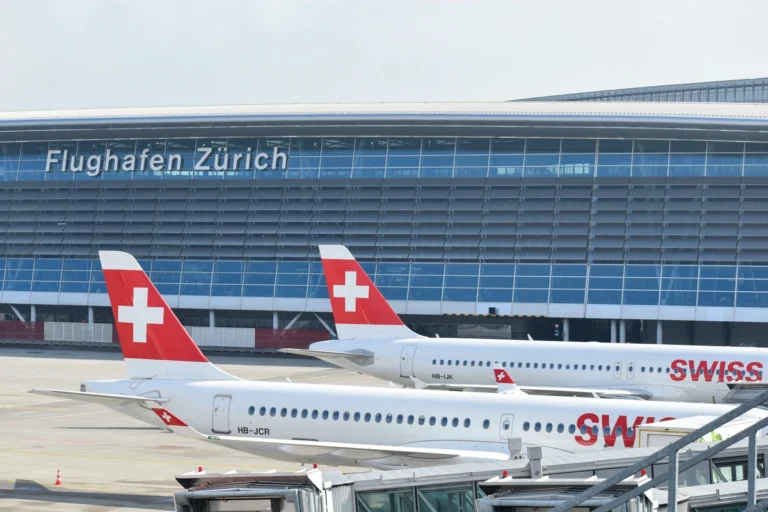
Nobody photographs this area, which is exactly why it competes on access rather than on the view — it sits closer to everything that moves. Trains, buses, and the Lake Lucerne boat piers at Bahnhofquai are all clustered at the station, so an early mountain departure or a pre-dawn run to Zurich Airport starts at your door instead of after a walk across town. The same location advantage works in reverse when you arrive: compare the Zurich Airport to Lucerne options before deciding whether the train station is really the end of your transfer.
There’s a second use for the station that has nothing to do with sleeping there. If your check-in is at 3 p.m. and your train lands at 9 a.m., the station’s lockers absorb the gap. SBB lists the Luzern lockers as always open, in several sizes, with a staffed luggage desk at the station for bags that do not fit a locker. SBB does not publish a per-station price list, so check the current rate on the SBB locker page for Luzern station before you count on it (Last verified: July 2026).
The Lakefront: Quiet, Priced Accordingly
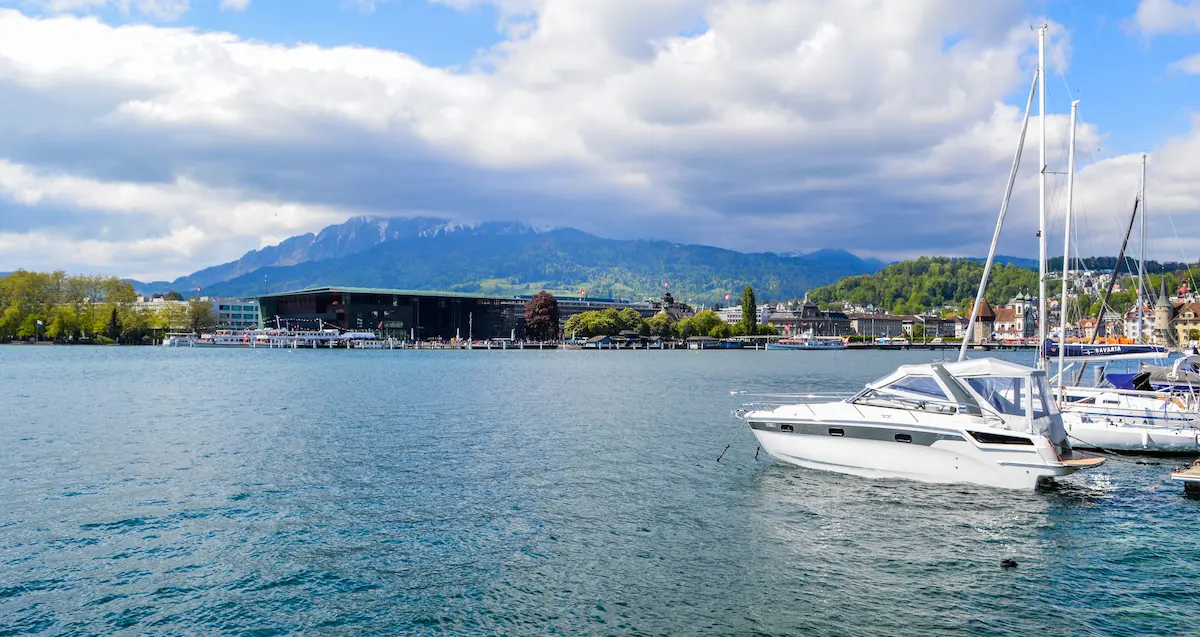
The quays deliver the thing the Old Town charges for and doesn’t reliably provide: an unobstructed lake view and a quiet night. What you give up is spontaneity. Every coffee, every dinner, every forgotten item at the hotel becomes a round trip on foot, and the quiet and the open view are the two things the rate is built on.
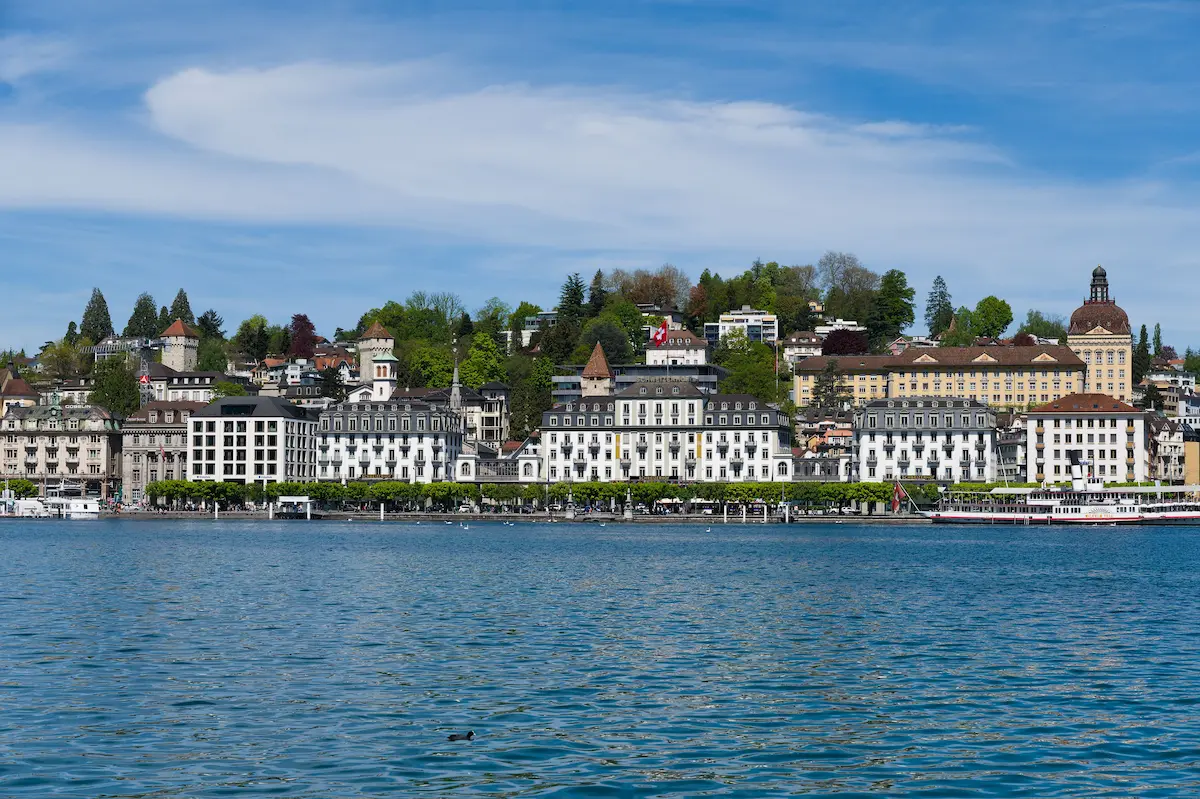
It’s the right call for a slow three-night stay. It’s the wrong call for a 20-hour stopover.
The Zone 10 Rule That Decides If “Cheaper Nearby” Is Cheaper
Here’s the part the hotel lists leave out.
Luzern Tourism’s Visitor Card gives overnight guests free use of buses and trains within fare zone 10 of the city network, 2nd class, boat cruises excluded. It can’t be bought — it’s issued only to guests who pay the visitor’s tax, and it’s sent by the accommodation before arrival as a wallet pass or a print-at-home PDF. On your first arrival, the reservation confirmation itself is accepted as a valid ticket. Critically, the official page limits eligibility to accommodation in the city of Lucerne or in Kriens.
Last verified: July 2026. Fares, zones, and eligibility change — confirm on luzern.com before booking.
The separate cash, card and tipping guide explains how to pay for everyday purchases in Lucerne and which currency to choose at terminals.
| Address inside zone 10 (Lucerne city or Kriens) | Address outside zone 10 | |
|---|---|---|
| Visitor Card issued | Yes, with the visitor’s tax | Not issued — Luzern Tourism limits it to stays in Lucerne city or Kriens |
| City buses and trains | Included, 2nd class | Paid, every trip, every day |
| Lake Lucerne boats | Not included either way | Not included |
| Traveling beyond zone 10 | Connecting ticket for the extra zones | Full fare |
| Real effect on a 3-night stay | Transport to the station and back costs nothing | A per-day transport line item the room rate never showed you |
The math flips more often than you’d think. A room 20 minutes out that saves you a modest amount per night can hand back part of that saving in daily fares — and hand back the rest in the two things you can’t buy later: the walk home after dinner, and the early departure. If you’re planning two days in Lucerne, where the second day is a mountain, that early departure is the entire trip.
Anything with a price or a boundary on it here should be confirmed at the source before you book. The zone map and the discount list live on the official Luzern Tourism and Passepartout pages, and they’re updated more often than any blog is.
Pick the Trade-Off You Can Live With
Where to stay in Lucerne comes down to which trade-off you can live with. Three lines, then go book.
First visit, one or two nights, sightseeing on foot? Old Town. You’re paying for the view and the location and accepting weekend noise as the price — ask for a courtyard-facing room.
Arriving late, leaving early, or building the trip around a mountain day? Station area. It’s the least interesting address and the most useful one, and the only one where a 6 a.m. departure costs you nothing but the alarm.
Three nights or more, and you want quiet? Lakefront. Budget for the highest rate of the three and for the fact that everything is a walk.
Whichever you pick, check that the address is inside zone 10 before you confirm — and email the property to ask them to send the Visitor Card ahead of arrival, so the confirmation is already in your wallet when you step off the train.