Paying in Lucerne: Cash, Cards and Tipping Rules First-Time Visitors Get Wrong
How much cash do you actually need in Lucerne if cards work almost everywhere?
For most visitors, use a card for regular purchases and carry CHF 20–50 as a practical backup. Tipping in Switzerland, cash or card, is optional: round up or leave about 10% for good restaurant service rather than importing a fixed 15–20% rule. At card terminals and ATMs, choose Swiss francs instead of your home currency.
Last verified: July 31, 2026. Payment acceptance, exchange rates, card fees, and terminal options can change. Check the payment method shown by the merchant or transport provider before committing to a purchase.
The CHF 20–50 range is an editorial planning allowance, not an official Swiss rule. It covers one or two small transactions when a terminal is unavailable or a vendor uses a payment system your foreign card cannot access. It is not meant to pay for a full restaurant meal, mountain ticket, or long Lake Lucerne boat trip.
Card First, CHF 20–50 Backup: The Practical Default
Switzerland is not a cash-only country. Switzerland Tourism says cash, credit cards, and debit cards are the most commonly accepted payment methods, with cards accepted almost everywhere. The Swiss National Bank’s 2025 company survey reached a similar conclusion: most retail and hospitality businesses accept cash, debit cards, credit cards, and mobile payment apps.
Cash still matters. The same SNB survey found that most hospitality and retail businesses still accept cash, but that public transport companies plan to restrict it, mainly by no longer taking cash at ticket machines and in vehicles.
That produces a mixed answer: carrying no cash is usually workable, but relying on cash for every transport purchase is not necessarily safer.
The Lucerne Payment Matrix
| Situation | Best default | Cash backup | What to verify |
|---|---|---|---|
| Hotel or established restaurant | Credit or debit card | Optional for a small tip | Whether the tip must be entered before the card is charged |
| Supermarket, museum, or major attraction | Card | Usually unnecessary | Foreign-card acceptance if the merchant lists restrictions |
| Weekly market or small independent stall | Ask or look for card logos | Useful | Each vendor chooses its own payment methods |
| Lucerne buses and local trains | SBB Mobile, ticket machine, or staffed sales point | Do not depend on paying cash inside the vehicle | Accepted methods at the specific machine or sales point |
| Scheduled Lake Lucerne boat | Official SGV webshop or ticket office | Useful only as an alternative | Onboard payment and the ticket rules for the selected sailing |
| Small kiosk or public restroom | Follow the posted method | Coins or a small note may help | Whether that specific location accepts card, coins, or both |
| ATM withdrawal | Debit card | This creates the cash backup | ATM fee, bank fee, and currency-conversion choice |
How the CHF 20–50 Backup Is Calculated
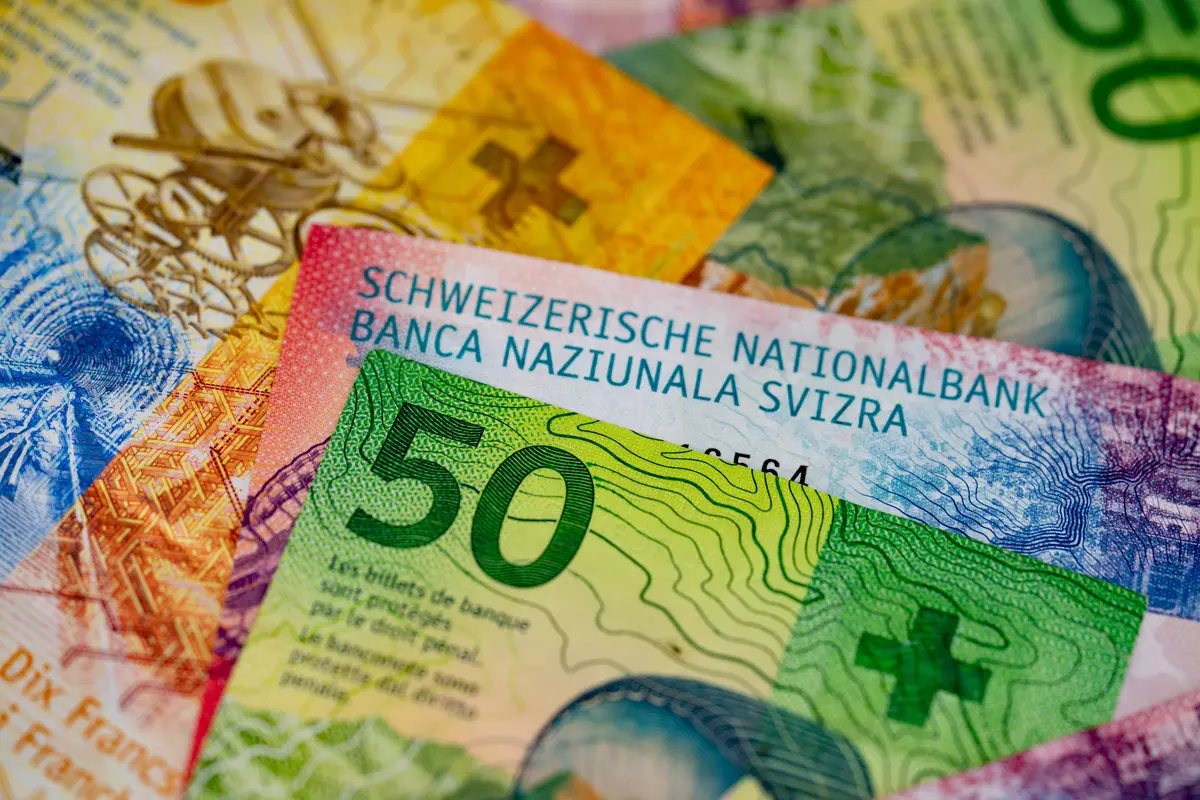
CHF 20 is a reasonable floor for a traveler who has working cards, prepaid transport, and no planned market shopping. It gives you limited room for one minor payment failure.
Move closer to CHF 50 when you plan to buy from independent market stalls, expect several small transactions, or want enough cash to cover a restaurant tip without asking whether it can be added to the card.
Carry more only when a known expense requires it. Withdrawing several hundred francs because one kiosk might prefer cash only increases what you carry and what you pay in ATM and conversion fees.
Where Payment Assumptions Break in Lucerne
Three situations produce most payment surprises here: city transport, the lake piers, and the weekly market. Each involves a different set of vendors rather than one citywide rule.
City Buses, Ticket Machines, and Apps
Passepartout tickets for the Lucerne fare network can be purchased through SBB.ch, SBB Mobile, ticket machines, and staffed points of sale. That gives you several channels, but it does not mean you should board a bus expecting the driver to take cash or a foreign card.
Buy or activate the ticket before boarding. At a machine, check the payment symbols before building the trip around cash.
If your accommodation provides a Visitor Card, confirm its validity before purchasing another city ticket. The official Visitor Card terms cover second-class buses and trains in zone 10 for eligible overnight guests, but boats are excluded. The address rule and zone limits are explained in the Lucerne accommodation-area comparison.
Accommodation bills can also include a separate local charge; the Switzerland tourist tax guide explains why the amount varies by destination and property.
Lake Boats and the Bahnhofquai Piers
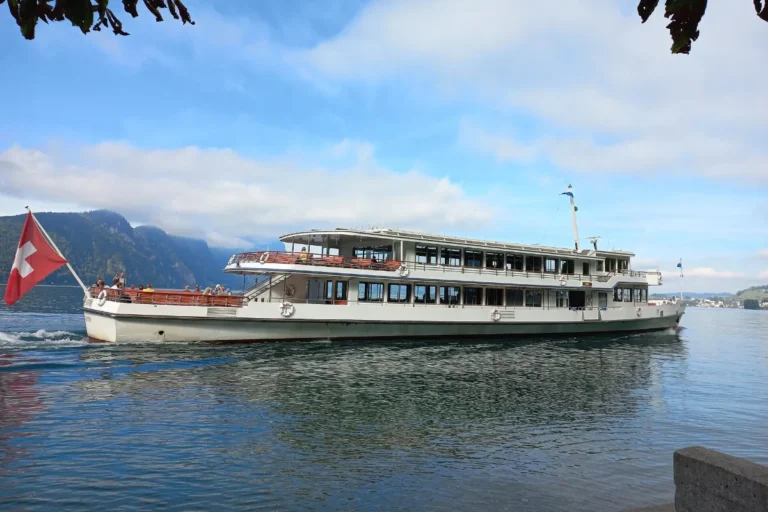
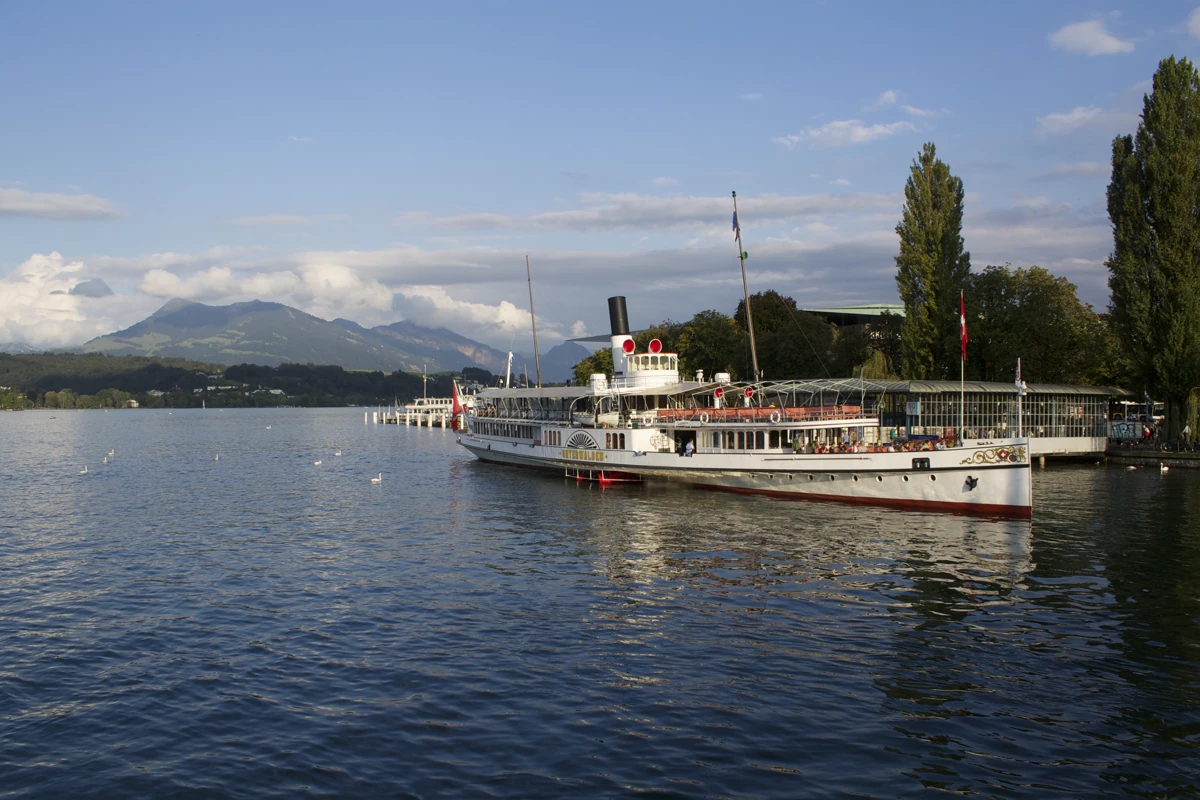
SGV sells Lake Lucerne tickets and day passes through its official webshop, and several products can also be purchased at ticket offices. The payment question is separate from pass coverage: a Swiss Travel Pass may cover a scheduled sailing, while the one-hour panorama yacht follows different ticket rules.
“Boat ticket” is not one product, and onboard payment options vary by sailing. Buy through the official channel when you can.
The Lake Lucerne boat comparison separates scheduled services, the panorama cruise, rail-pass coverage, fares, and departure piers.
Markets, Kiosks, and Public Restrooms
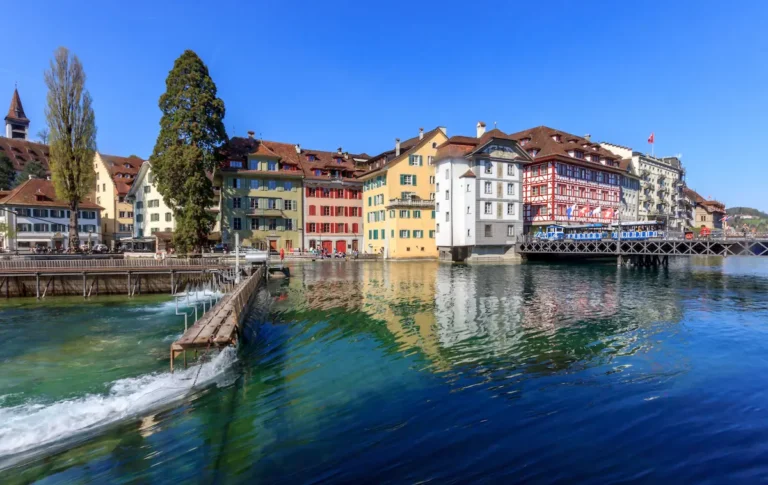
Lucerne’s weekly market runs along Rathausquai, Unter der Egg, and Bahnhofstrasse on Tuesday and Saturday mornings. The market is one event made up of independent sellers. An individual stall may accept international cards, cash, or a Swiss mobile-payment method such as TWINT.
Foreign visitors should not treat a TWINT sign as proof that their own mobile wallet will work. Look for the card logos you use or ask before ordering.
The same applies to kiosks and public restrooms: follow the method posted at that location, because no citywide rule makes every restroom coin-only or every kiosk card-friendly.
Tipping in Switzerland, Cash or Card: Round Up, Don’t Import 20%
The official Switzerland Tourism tipping guidance says guests are not obliged to tip. In restaurants, it describes approximately 10% or rounding the bill to a convenient amount as customary.
That leaves room for judgment. A CHF 47 bill might become CHF 50. A CHF 92 bill could become CHF 100 after strong service. Paying the exact CHF 47 or CHF 92 is not a violation of a mandatory tipping rule.
Restaurants and Cafés
Use three simple levels:
- Pay the exact bill when service was ordinary or limited.
- Round up for straightforward table service.
- Leave around 10% when the service genuinely merits it.
Do not add another 10% automatically after already rounding by nearly that amount. CHF 92 rounded to CHF 100 is already an 8.7% tip.
How to Tip When Paying by Card
Ask the server to charge the final total before the payment is processed. For a CHF 47 bill, say “CHF 50, please” before tapping or inserting the card.
Some terminals offer an on-screen tip choice; others process only the amount the staff entered. Do not wait for a signature line that may never appear.
Cash remains a useful fallback when the terminal cannot add a tip, but it is not required by a national rule.
Pay in CHF: How to Spot Dynamic Currency Conversion
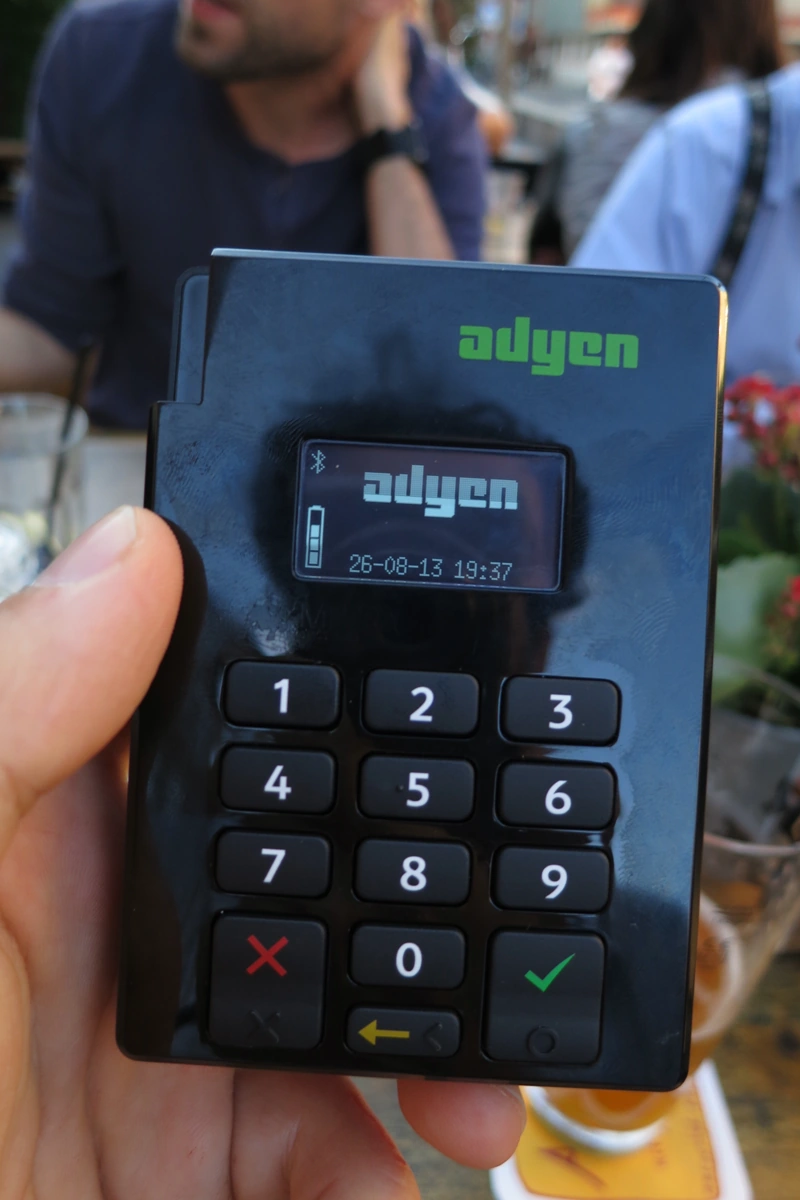
A terminal may recognize a foreign card and offer two currencies: CHF or your card’s home currency. The second option is dynamic currency conversion, or DCC.
With CHF, the merchant sends a Swiss-franc transaction and your card issuer or network handles the conversion. With DCC, the merchant’s payment provider converts the purchase before it reaches your account.
| Terminal choice | Who performs the conversion? | What to check |
|---|---|---|
| CHF / local currency | Your card network or issuer | Your bank’s foreign-transaction fee and exchange-rate policy |
| Home currency | Merchant or ATM’s DCC provider | Displayed exchange rate, markup, and final converted amount |
Visa’s dynamic currency conversion guidance says merchants and ATMs should give the cardholder the choice to accept or decline the conversion and must not choose on the cardholder’s behalf. Visa itself does not recommend a currency: it says the decision is yours after you review the rate and fees shown on screen.
Select CHF unless you have compared the displayed DCC total with the fees and rate offered by your card issuer. “Pay in dollars,” “pay in pounds,” or another familiar currency may look simpler, but familiarity does not make the conversion cheaper.
The same decision can appear at an ATM. Choose a CHF withdrawal and decline the ATM’s conversion when you want your own card provider to handle the exchange. The ATM may still charge a separate access fee, and your bank may charge withdrawal or foreign-transaction fees. Read both screens before confirming.
If a merchant processes the transaction in your home currency after you chose CHF, keep the receipt and contact your card issuer.
Three Payment Decisions to Make Before You Arrive
Set aside CHF 20–50 rather than building the trip around a thick stack of notes. At restaurants, round up or leave around 10% when the service merits it; do not import a compulsory 20% rule. At terminals and ATMs, select CHF and read the conversion details before approving the transaction.