Mount Pilatus vs Rigi: Which Lucerne Day Trip Is Better?
Mount Pilatus vs Mount Rigi comes down to two different versions of the same Lucerne day-trip problem. Choose Pilatus when the transport sequence itself is a major part of the day: boat or train to Alpnachstad, cogwheel railway, aerial cableway, panorama gondolas, and bus. Choose Rigi when you want more route combinations, short walks at several stations, or no additional mountain-ticket cost with a Swiss Travel Pass.
Last verified: July 2026. Prices, timetables, and operating conditions can change. Confirm the selected route on the official Pilatus, Rigi, SBB, and boat timetables before travel.
The useful distinction is not “rocky mountain versus green mountain.” It is how each trip behaves once you add your rail pass, the route from Lucerne, the time spent changing transport, the walks you want to do, and the operating window on your travel date. Pilatus has a clearly priced complete loop in summer. Rigi has a network of approaches that can be combined in several ways, but the CHF 84 mountain day pass does not by itself include the boat or mainline train from Lucerne.
Mount Pilatus vs Mount Rigi at a Glance
| Decision factor | Mount Pilatus | Mount Rigi |
|---|---|---|
| Mountain ticket | CHF 84 full fare; CHF 42 with Swiss Half Fare Card or Swiss Travel Pass | CHF 84 day pass; CHF 42 with Half Fare; included with Swiss Travel Pass |
| Transport from Lucerne | Kriens route: approximately 15 minutes on bus 1, a 5-minute walk, then about 40 minutes to Pilatus Kulm. Alpnachstad route: approximately 20 minutes by train or 50–90 minutes by boat, then about 30 minutes by cogwheel railway | Vitznau route: approximately 60 minutes by boat, then about 30 minutes by cogwheel railway. Goldau route: approximately 30 minutes by train from Lucerne, then about 40 minutes by cogwheel railway |
| Complete circuit | Golden Round Trip: Lucerne–Alpnachstad–Pilatus Kulm–Kriens–Lucerne by second-class boat, cogwheel railway, cableway, gondolas, and bus; CHF 119.80 full fare | A common circuit is Lucerne–Vitznau–Rigi Kulm–Rigi Kaltbad–Weggis–Lucerne. The Rigi day pass covers the Rigi railways, not the Lucerne boat or mainline train unless your travel pass covers them |
| Swiss Travel Pass | Regular train, bus, and boat access is covered; the Pilatus mountain section costs CHF 42 | Regular access and the Rigi mountain railways are included |
| Swiss Half Fare Card | CHF 42 mountain excursion; Golden Round Trip second class CHF 59.90 | CHF 42 Rigi day pass; access by regular train, bus, and boat is generally sold at the applicable half fare |
| Defined travel-time comparison | The Kriens approach has fewer long transport legs. The Golden Round Trip includes a 50–90 minute boat ride, a roughly 30-minute cogwheel ride, the Kriens-side descent, transfers, and summit time | Via Vitznau, the scheduled transport to Rigi Kulm is about 90 minutes before transfer margins. Via Goldau, the train and cogwheel components total about 70 minutes before transfer margins |
| Short walking options | Summit viewpoints are close to Pilatus Kulm; the Tomlishorn out-and-back takes about 1 hour 30 minutes and is usually open from mid-June to October | Rigi publishes easy walks of about 30 minutes to 1.5 hours around Rigi Kulm, Rigi Kaltbad, Rigi Staffel, and Rigi Scheidegg |
| 2026 operating windows | Cogwheel railway: May 11–November 29. Lucerne–Alpnachstad boat connection: through October 18. Kriens gondola and cableway closed for maintenance October 19–November 27 | There is no single network-wide season. Vitznau and Goldau cogwheel trains and the Weggis and Kräbel cable cars have separate timetables. Weggis–Rigi Kaltbad is closed on weekdays November 16–27 for maintenance |
| Practical fit | Travelers who want a fixed multi-mode circuit and are traveling while all required sections operate | Travelers who want multiple access routes, modular walks, or full Rigi coverage through the Swiss Travel Pass |
The fares and Pilatus operating dates above come from the official Pilatus price list and 2026 timetable. Rigi fares, line calendars, and maintenance periods come from the official Rigi prices, timetables, and operating information. Pass coverage is confirmed on the official Swiss Travel Pass page.
What the Price Really Means With and Without a Rail Pass
The two mountain products can show the same CHF 84 full fare and still create different totals from Lucerne. The Mount Pilatus vs Mount Rigi price comparison only makes sense when you add access transport and pass coverage to the mountain ticket.
Pilatus sells both the mountain excursion and a complete transport circuit. The CHF 84 mountain fare covers the ascent and descent between Kriens or Alpnachstad and Pilatus Kulm. The CHF 119.80 Golden Round Trip adds the second-class boat from Lucerne to Alpnachstad and the Kriens-side return by bus. It is a defined package rather than a mountain ticket alone.
Rigi’s CHF 84 day pass covers the Rigi Railways network: the cogwheel trains from Vitznau and Goldau and the cable cars from Weggis and Kräbel. It does not automatically add the boat or mainline train used to reach those valley stations. Your access cost therefore depends on whether you travel through Vitznau, Weggis, or Goldau and which pass you hold.
| Your pass | Pilatus mountain cost | Pilatus complete-route implication | Rigi mountain cost | Rigi access implication |
|---|---|---|---|---|
| No rail pass | CHF 84 | Golden Round Trip second class: CHF 119.80 | CHF 84 | Add the selected boat or mainline train from Lucerne |
| Swiss Half Fare Card | CHF 42 | Golden Round Trip second class: CHF 59.90 | CHF 42 | Buy the selected access route at the applicable reduced fare |
| Swiss Travel Pass | CHF 42 | Regular boat, train, and bus access is covered; buy the discounted mountain section rather than assuming the packaged fare is required | CHF 0 | SBB includes both regular public transport and the Rigi mountain excursion |
This creates the clearest pass-based split in the comparison. With no pass or with the Half Fare Card, both mountains start from the same mountain-ticket amount. With the Swiss Travel Pass, Rigi requires no separate Rigi Railways ticket, while Pilatus still requires CHF 42 for the mountain section.
Last verified: July 2026. Prices, timetables, and operating conditions can change.
Which Experience Fits Your Day: Transport, Walking, and Pace
Choose Pilatus When the Transport Sequence Is Part of the Attraction
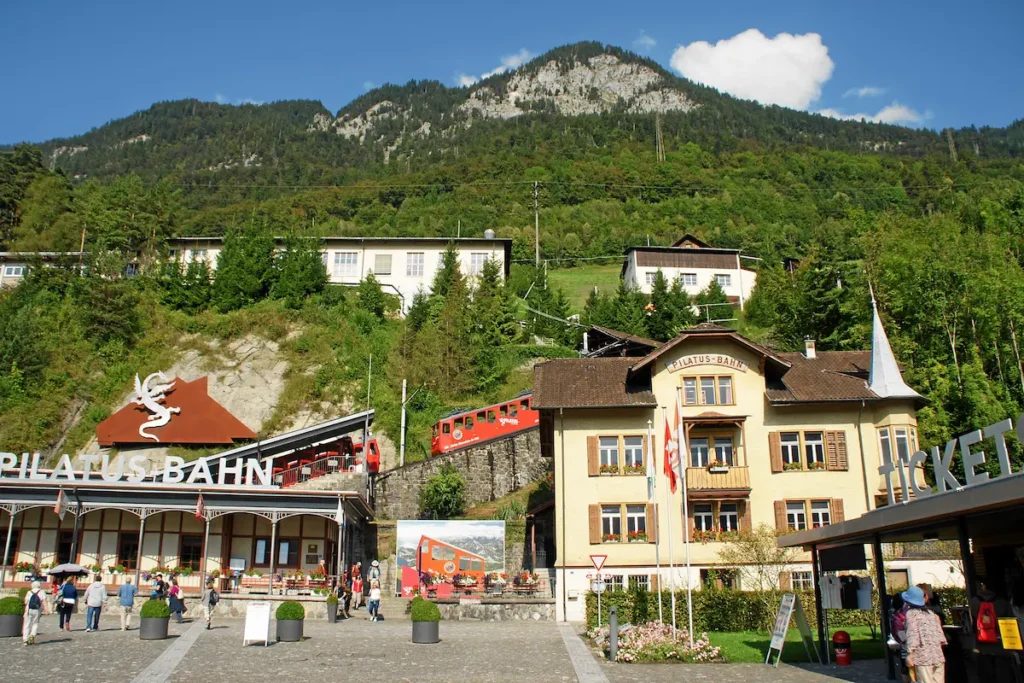
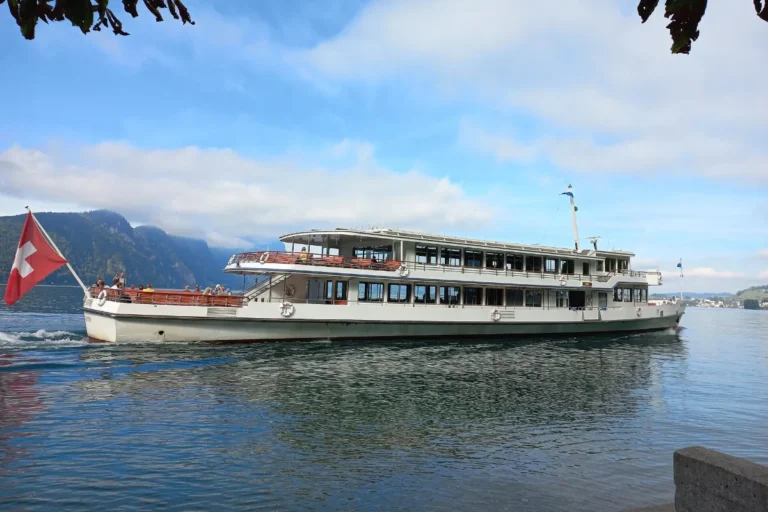
The Golden Round Trip has a fixed logic: leave Lucerne by boat, climb from Alpnachstad by cogwheel railway, cross the summit area, descend toward Kriens by aerial cableway and gondolas, then return by bus. The route can also be traveled in the opposite direction. Its value is the sequence of transport modes, not only the time at Pilatus Kulm.
A faster access pattern uses Kriens in both directions. Pilatus states that bus 1 from Lucerne takes approximately 15 minutes, followed by a 5-minute walk to the valley station; the mountain journey from Kriens to Pilatus Kulm takes about 40 minutes. From Alpnachstad, the cogwheel railway takes about 30 minutes. Those figures describe the transport components, not the full day, because waiting time and time at the summit remain personal.
Walking at Pilatus can be brief or substantial. The summit area has short access to viewpoints, while the official Flower Trail to Tomlishorn takes about 1 hour 30 minutes out and back and is usually open from mid-June to October. Check the live trail status before treating it as part of the day.
Choose Rigi When You Want More Route Combinations
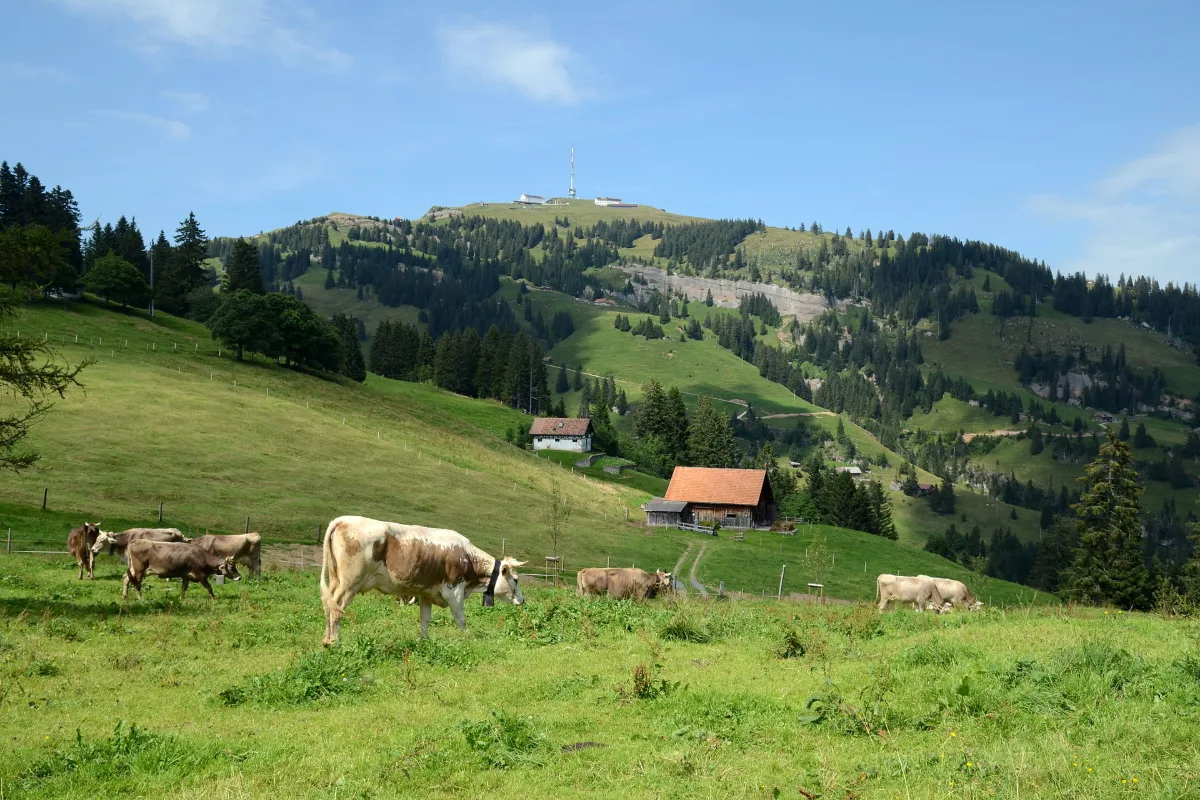
Rigi Kulm can be reached from Vitznau or Goldau by cogwheel train. A third pattern uses the cable car from Weggis to Rigi Kaltbad and continues by cogwheel train. The official travel components are approximately 60 minutes by boat from Lucerne to Vitznau plus 30 minutes to Rigi Kulm; from Lucerne through Goldau, allow roughly 30 minutes on the mainline train and 40 minutes on the cogwheel railway, before connection margins.
This network makes it possible to enter through one valley station and leave through another. A traveler can go up from Vitznau, stop at Rigi Kulm, descend to Rigi Kaltbad, take the cable car to Weggis, and return by boat. Another traveler can use Goldau in both directions and avoid the lake segment. The route choice controls the pace more than the mountain day pass does.
Rigi also distributes short walking options across several stations. Its official planning pages list easy walks lasting about 30 minutes to 1.5 hours around Rigi Kulm, Kaltbad, Staffel, and Scheidegg. That makes Rigi useful when the group wants to choose a walk after seeing the weather and energy level rather than committing to one summit trail in advance.
Planning a wider stay around this excursion? The two days in Lucerne guide shows how to combine one mountain day with the city without turning this comparison into a fixed itinerary.
When Fewer Connections Matter More
Neither mountain always requires more changes. Compare the route, not the brand name.
Pilatus via Kriens uses a bus, a short walk, gondolas, and one aerial cableway. Rigi via Goldau uses a mainline train and one cogwheel train. Both avoid the boat-based circuits. Pilatus’s Golden Round Trip and a Rigi circuit through Vitznau and Weggis add more stages because transport variety is part of the plan.
For travelers who prefer fewer transitions, compare Kriens–Pilatus Kulm with Lucerne–Goldau–Rigi Kulm. For travelers who want the lake crossing included, compare the full Golden Round Trip with the Vitznau/Weggis Rigi circuit. Those are comparable route pairs; “Pilatus versus Rigi” without a route is not.
Weather and Seasonal Operations Can Override the Verdict
A pass advantage or preferred route does not help when the summit is inside cloud or one required line is closed. In a Mount Pilatus vs Mount Rigi decision, weather and operating calendars can override every other factor. Check both mountains on the same morning rather than relying only on a city forecast.
Pilatus has a particularly important 2026 mismatch between its lines. The cogwheel railway operates from May 11 through November 29, but the Lucerne–Alpnachstad boat connection runs only through October 18. The Kriens gondola and cableway then close for maintenance from October 19 through November 27. During that maintenance window, the cogwheel railway may still operate while a cross-mountain circuit through Kriens does not.
Rigi publishes separate calendars for each line rather than one universal opening period. In 2026, the Vitznau and Goldau cogwheel routes have different timetable periods, and the Weggis–Rigi Kaltbad cable car is closed on weekdays from November 16 through 27 for maintenance. A closed cable car does not automatically close the cogwheel routes, so check the exact line used in your plan. Which months keep the most routes running is set out in our guide to the best time to visit Lucerne.
Use the official Pilatus live page and Rigi webcams for visibility, then open the operating notice for the chosen line. Mountain conditions can change during the day, and Pilatus advises checking current facilities and reserving the cogwheel railway when required.
Last verified: July 2026. Prices, timetables, and operating conditions can change.
Make the Choice in Three Checks
Start with your pass. A Swiss Travel Pass removes the Rigi mountain-ticket cost but leaves CHF 42 for the Pilatus mountain section. Without that pass, compare the complete routes rather than the identical CHF 84 mountain fares.
Next, decide what should occupy the day. Pilatus gives you a defined multi-mode circuit when the boat, cogwheel railway, and Kriens side are all operating. Rigi lets you build the day through Vitznau, Weggis, or Goldau and choose among several short walking areas.
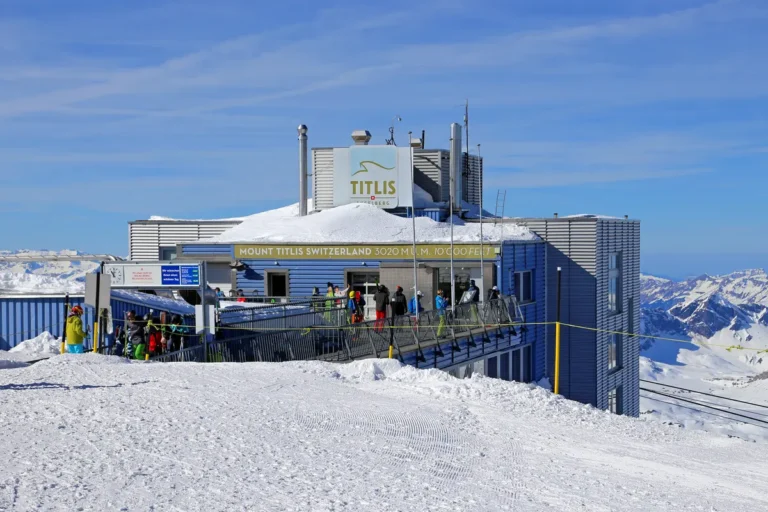
Then check the live conditions and exact operating line. A visible, fully operating mountain is the sensible choice over a preferred route hidden in cloud or broken by maintenance. That third check is where the Mount Pilatus vs Mount Rigi decision stops being theoretical. If snow and glacier access matter more than either route, compare independent transport and guided tours in our Mount Titlis from Lucerne guide.
Open both webcam pages on the morning of travel, confirm the last descent and every required connection, then buy only the mountain segment your pass does not cover.